Canary Island pine
Pinus canariensis C. Sm.
Description
The Canary Island pine (Pinus canariensis) is a significant coniferous species belonging to the Pinaceae family. Native to the higher elevations of the Canary Islands, this tree is widely recognized for its ecological resilience, particularly its unique ability to sprout epicormic shoots after sustaining fire damage.
Historically restricted to its native archipelago, the tree has been successfully introduced into other Mediterranean and subtropical climates across the globe, including South Africa, California, and various parts of Australia. Its rapid growth and adaptability to diverse landscapes have made it a preferred choice for large-scale reforestation and timber production projects.
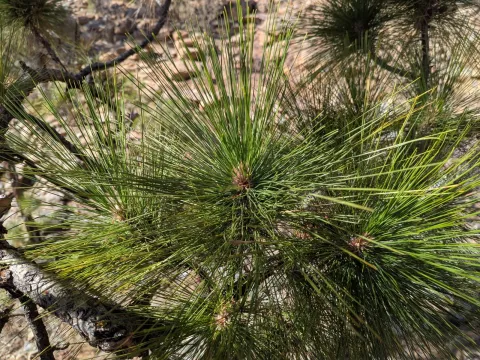
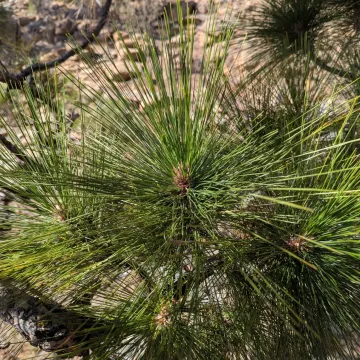
Botanically, the species is distinguished by its long, bright green needles, usually occurring in bundles of three, and its exceptionally thick, cork-like bark. This anatomical structure serves as a defense mechanism against intense heat, allowing the tree to survive in environments prone to frequent wildfires that would otherwise devastate less specialized conifers.
Cultivation of Pinus canariensis requires well-drained, porous soils, as it is particularly sensitive to root rot triggered by waterlogging. Farmers and foresters should ensure adequate spacing during the initial planting stages to promote deep root penetration and healthy canopy development. Protection from extreme frost is essential, as the species is not cold-hardy.
Economically, the species is highly valued for its heartwood, which is rich in resin and displays high durability. This makes it suitable for heavy construction, high-end furniture, and naval applications. While generally robust, plantations must be monitored for common pests such as bark beetles and needle blight, especially in monoculture settings where preventative management is key.
- Needles up to 30 cm long
- Notable fire-adapted regeneration
- Rapid timber growth cycle
- Resistant to high drought levels
- Valuable reddish-brown wood
Photo gallery