Mexican pinyon
Pinus cembroides Zucc.
Description
Mexican pinyon (Pinus cembroides) is a remarkable species belonging to the Pinaceae family, primarily recognized for its edible seeds, often marketed as pine nuts. This slow-growing evergreen typically exhibits a spreading habit and can reach heights of up to 10 meters, adapting well to environments where moisture is a limiting factor.
The native range of this species extends across the arid regions of Mexico and parts of the southwestern United States. It has evolved to thrive in high-altitude environments, characterized by rocky terrain, thin soils, and sporadic rainfall. This natural resilience makes it an excellent candidate for reforestation in degraded, dry landscapes.
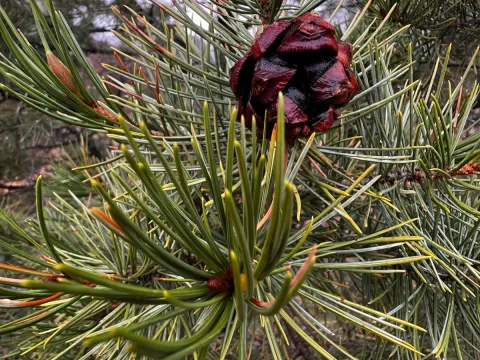
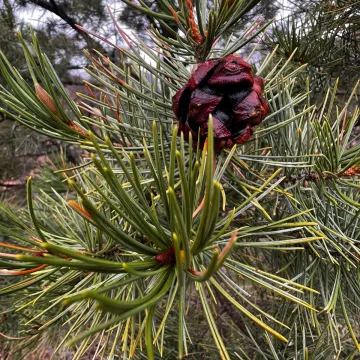
Botanically, the tree is distinct due to its stiff needles occurring in fascicles of three and its relatively large, oily seeds housed within small, woody cones. The root system is extensive and deep, allowing the plant to tap into deep soil moisture, which is a critical evolutionary adaptation for survival in semi-arid zones.
Regarding cultivation requirements, the Mexican pinyon demands excellent soil drainage and full exposure to sunlight. Heavy, water-logged soils are detrimental to its health and should be avoided. Agronomic practices are generally minimal, focusing on initial establishment and protection from intense weed competition during the juvenile stage of growth.
Economically, the species is cultivated for its edible nuts, which have high market value, and for its contribution to soil erosion control in fragile ecosystems. While generally hardy, the tree can be susceptible to bark beetles and certain fungal infections if stressed by excessive moisture or poor aeration. Integrated pest management and careful site selection are essential for successful production.
Photo gallery