Coulter pine
Pinus coulteri D. Don
Description
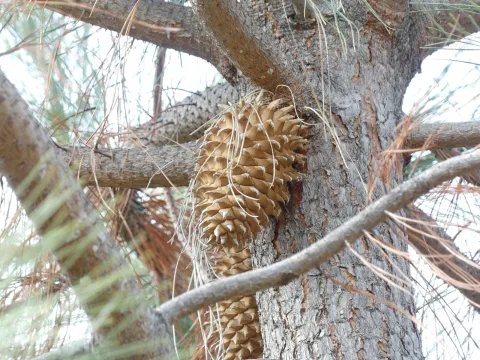
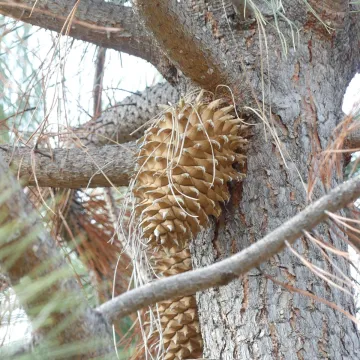
The Coulter pine (Pinus coulteri) is a distinctive coniferous evergreen tree belonging to the family Pinaceae. This species is world-renowned for bearing the heaviest pine cones of any pine species, with mature specimens sometimes weighing several kilograms. It typically reaches a mature height of 20 to 30 meters, characterized by a robust trunk and a heavy, spreading canopy.
The native range of the Coulter pine is restricted to the mountainous regions of Southern California and Northern Mexico. In its natural habitat, it thrives in dry, rocky soils and is often found on slopes where other conifer species struggle to survive. This geographic distribution indicates a high level of adaptation to Mediterranean-like climates with hot, dry summers and cool, wet winters.
Botanically, the tree is defined by its long, stiff, grey-green needles arranged in bundles of three. These needles can grow up to 30 centimeters in length, providing a dense foliage texture. The bark is notably thick and dark, deeply furrowed into plates, which serves as a natural defensive mechanism against wildfire damage in its native ecosystem.
Agricultural and gardening requirements focus on soil drainage. The Coulter pine will not thrive in waterlogged or heavy clay environments; it demands porous, well-drained soil. It is highly photophilous, meaning it requires full sun exposure to maintain its health and density. Proper spacing is critical during planting, as the tree grows quite broad and requires significant airflow to prevent moisture-related diseases.
- Features the heaviest cones in the Pinus genus.
- Excellent drought tolerance once fully established.
- Requires well-drained, sandy, or rocky soil types.
- High aesthetic value in parks and large landscapes.
- Sensitive to high humidity and poor air circulation.
The primary utility of the Coulter pine today is in ornamental forestry and landscape architecture. It is planted as a specimen tree where climate conditions permit. Regarding plant health, the most common threats include pitch canker and infestation by bark beetles. Effective management involves maintaining tree vigor through appropriate site selection and periodic monitoring of the crown health.
Photo gallery