Aleppo pine
Pinus halepensis Mill.
Description
The Aleppo pine (Pinus halepensis Mill.) is a prominent member of the Pinaceae family. Renowned for its exceptional resilience, this species serves as a critical agricultural and forestry resource in regions characterized by arid climates and poor soil conditions.
Native to the Mediterranean Basin, its natural range extends across Southern Europe, North Africa, and the Levant. Because of its adaptability, it has been introduced worldwide in regions with similar Mediterranean climates, where it serves as a staple for greening degraded lands and preventing soil erosion.
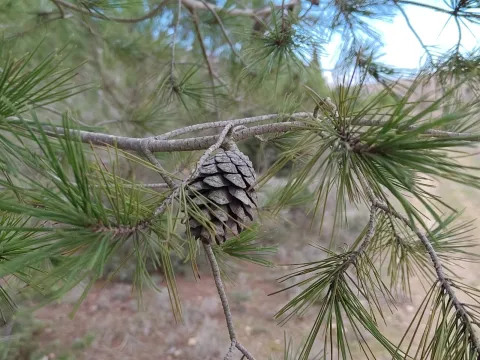
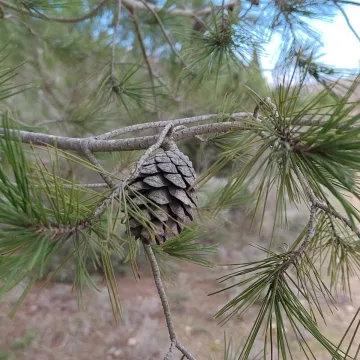
Botanically, the tree typically reaches 15–20 meters in height, displaying an irregular, open canopy. Its needles are slender, light green, and grow in pairs. A distinctive feature of this pine is its production of small, glossy cones that often persist on the branches, allowing for gradual seed dispersal even during dry seasons.
Cultivation requirements for the Aleppo pine prioritize maximum sunlight exposure and well-draining soil. It is highly tolerant of calcareous and rocky substrates, making it ideal for reforestation in areas where other species fail. From an agronomic standpoint, young plantations require minimal intervention, as the mature tree is remarkably self-sufficient in water management.
The economic utility of the Aleppo pine spans from timber production for crates and construction to the extraction of resin. However, practitioners must be aware of specific vulnerabilities to maintain orchard health:
- infestations by the pine processionary moth;
- fungal root pathogens in poorly drained sites;
- high flammability due to volatile resinous compounds.
Photo gallery