Sugar pine
Pinus lambertiana Douglas
Description
The Sugar pine (Pinus lambertiana) is a magnificent evergreen tree species belonging to the Pinaceae family. It is widely recognized as the tallest and most massive pine species in the world, capable of reaching remarkable heights and girths in its native ecosystem.
This species is native to the mountain ranges of the North American Pacific Coast, particularly the Cascade Range and the Sierra Nevada. Its natural distribution extends from Oregon down to Baja California, where it thrives in temperate climates characterized by distinct seasons and moderate to high annual precipitation.
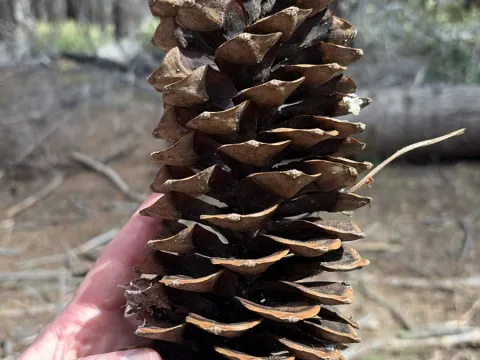
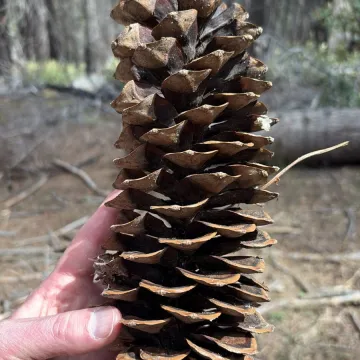
Botanically, the Sugar pine is distinguished by its long, slender needles arranged in bundles of five and its massive cones, which can reach up to 50 centimeters in length. The tree features a deep, robust root system and a straight, columnar trunk, requiring significant vertical space and soil depth to achieve its full potential.
Successful cultivation of Pinus lambertiana demands well-drained, fertile soils with a low risk of waterlogging. The species is sensitive to soil compaction and prefers sites that offer full sun exposure. Protection from harsh, drying winds is particularly critical during the early stages of establishment to ensure healthy apical growth.
In terms of forestry and utility, the wood of the Sugar pine is highly prized for its exceptional dimensional stability, ease of working, and lightweight nature, making it ideal for precision joinery. While it serves an important role in forest restoration, white pine blister rust remains a significant pathogenic threat that requires ongoing management and resistant variety development.
Photo gallery