Merkus pine
Pinus merkusii Jungh. & de Vriese
Description
Merkus pine (Pinus merkusii) is a significant species of the family Pinaceae, notable for being one of the few pines that naturally occur in tropical regions. It is a vital commercial tree species in Southeast Asia, valued for its rapid growth in specific tropical environments.
The native range of this species extends across Southeast Asia, including parts of Vietnam, Thailand, the Philippines, and Indonesia. It thrives in diverse landscapes, ranging from lowland tropical forests to mountainous regions, exhibiting remarkable adaptation to varying environmental conditions.
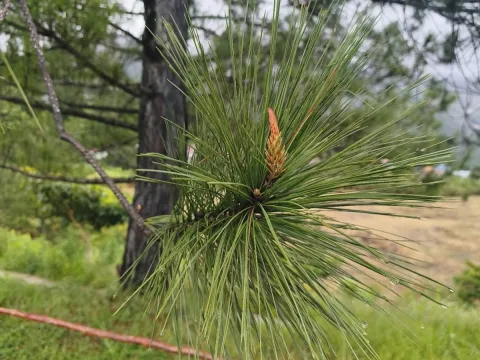
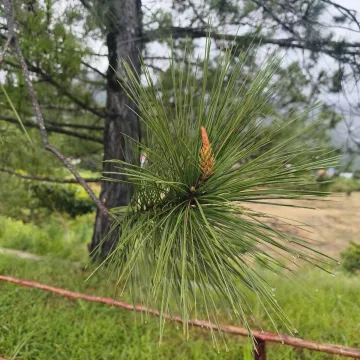
Botanically, it is an evergreen conifer growing up to 45 meters tall. It is easily identified by its long, paired needles and small to medium-sized cones. A unique biological feature is the "grass stage" in its early development, where the seedling remains short and dense, protecting its growth bud from fire, which is a common occurrence in its native habitat.
Successful cultivation requires well-drained, acidic, and nutrient-poor soils that do not tolerate waterlogging. Being highly light-demanding, it must be planted in open areas to ensure vigorous development. Management includes regular site clearing and weeding, especially during the first few years, to prevent competition from aggressive tropical ground cover.
The species serves various economic purposes, primarily as a source of high-quality timber for construction, furniture, and paper pulp. Additionally, it is a traditional source of turpentine and resins. Like any plantation crop, it is susceptible to specific pests, such as shoot moths, and various fungal infections, requiring active forest health management and disease monitoring programs.
Photo gallery