Bishop pine
Pinus muricata D. Don
Description
The Bishop pine (Pinus muricata) is a distinct evergreen conifer belonging to the Pinaceae family. It is recognized for its remarkable ability to thrive in harsh coastal environments, characterized by persistent maritime winds and nutrient-poor soils that would be inhospitable to most other tree species.
Native to the coastal regions of California and Baja California, the tree has evolved in a Mediterranean-type climate. This habitat is defined by mild, wet winters and long, dry summers, often accompanied by heavy fog, which provides the necessary moisture for the tree's development during dry periods.
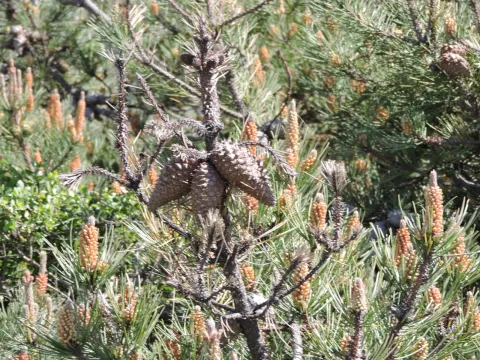
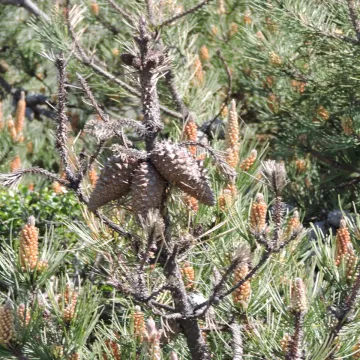
The botanical profile of the Bishop pine includes dense needles occurring in pairs and famously prickly, persistent cones. These cones are serotinous, meaning they often require the heat of a wildfire to melt the resin sealing them shut, which allows the seeds to be released and colonize the burnt soil effectively.
In terms of agricultural and forestry requirements, the Bishop pine demands excellent drainage. It is highly intolerant of waterlogged conditions and clay-heavy substrates. Cultivation involves selecting sunny, well-ventilated locations. Minimal soil preparation is required, as the tree is naturally adapted to flourish in sandy or rocky terrain with low fertility levels.
Economically, the species is utilized for reforestation projects, erosion control on coastal slopes, and as a durable timber source for specialized construction. Disease management is focused on preventing fungal pathogens such as pitch canker. Common pests include bark beetles and various aphids, which can affect tree vigor in improperly maintained stands.
- Family: Pinaceae
- Habit: Evergreen coniferous tree
- Sunlight: Full sun
- Soil Type: Well-drained, sandy/rocky
- Conservation Status: Native to North America
Photo gallery