Radiata pine
Pinus radiata D. Don
Description
Radiata pine (Pinus radiata D. Don) is a fast-growing conifer species belonging to the Pinaceae family. It is arguably the most widely planted plantation forest tree in the world, valued for its rapid growth rate and high industrial versatility in suitable temperate climates.
While native to a very small area on the central coast of California, the species has been successfully introduced globally. Today, it forms the backbone of the forest plantation industry in major timber-producing nations such as New Zealand, Chile, South Africa, and Australia, where it is managed as a high-yield agricultural crop.
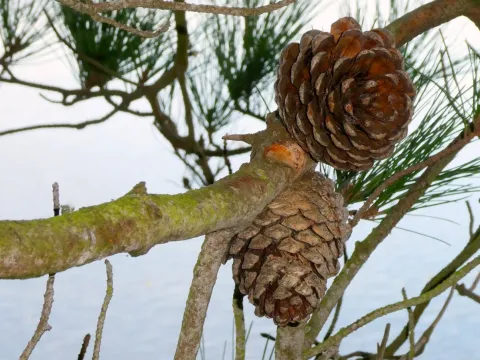
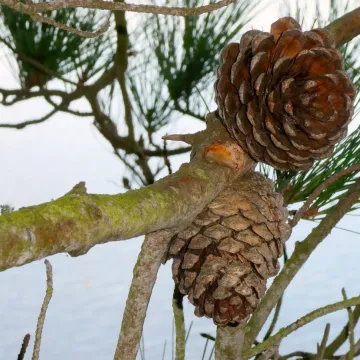
The tree is characterized by its straight trunk and vigorous growth in its juvenile stage. Its needles are typically arranged in bundles of three and are bright green in color. The cones are distinctively asymmetrical and serotinous, meaning they often remain closed on the tree until exposed to high temperatures or certain environmental triggers.
Cultivation of Pinus radiata requires specific environmental conditions, thriving best in Mediterranean or oceanic climates with moderate rainfall and limited frost. It grows most effectively on deep, well-drained, slightly acidic soils. Commercial silviculture involves strict site preparation, the selection of genetically improved seedlings, and aggressive thinning regimes to maximize sawlog volume.
The economic value of this timber is high due to its light weight, moderate strength, and ease of machining. It is widely utilized across several sectors:
- Construction and structural framing;
- Furniture and cabinetry manufacturing;
- Pulp and paper production;
- Wood-based panels and veneer.
Photo gallery