Taiwan red pine
Pinus taiwanensis Hayata
Description
Taiwan red pine (Pinus taiwanensis Hayata) is an evergreen coniferous tree belonging to the family Pinaceae. It is native to the high mountain ranges of Taiwan, where it serves as a keystone species in alpine forest ecosystems. The tree is highly regarded for its resilience and its ability to thrive in challenging, high-altitude environments.
The species is endemic to Taiwan, primarily found at elevations ranging from 750 to 3,000 meters above sea level. It has evolved to survive in temperate and sub-alpine climates, often growing in rocky and nutrient-poor soils. Its distribution is heavily tied to the island's unique mountain topography, which provides the cool and moist conditions necessary for its development.
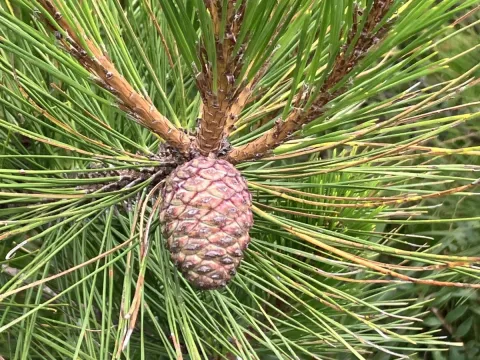
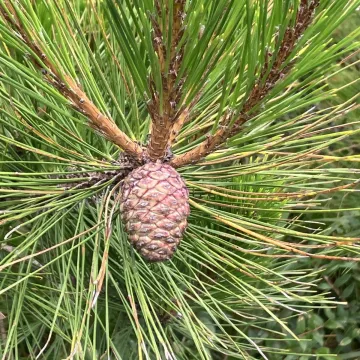
Botanically, Pinus taiwanensis is characterized by its pair-needle arrangement and its ability to develop a dense, often flattened canopy in mature specimens. The needles are rigid and deep green, while the cones exhibit a characteristic ovate shape. As a long-lived conifer, it focuses its energy on deep root growth, allowing it to withstand extreme winds and slopes.
In terms of cultivation, the tree requires well-drained, acidic soil and full exposure to sunlight. While it is adaptable to various soil textures, waterlogging must be strictly avoided to prevent root diseases. Propagation is typically performed via seeds, which benefit from stratification to mimic natural mountain cycles. Young trees require protection from competition until they are established.
The economic and ecological importance of the Taiwan red pine includes its use in forest conservation and slope stabilization. Due to its sturdy timber, it has historically supported local construction needs. In modern landscape architecture, it is valued for its majestic form and ecological durability, making it a sustainable choice for reforestation projects in mountainous regions.
- Excellent erosion control properties.
- High demand for sunlight.
- Sensitivity to soil water stagnation.
- Vulnerability to pine wilt disease in poor conditions.
Photo gallery