
Lodgepole pine
Pinus contorta Douglas ex Loudon var. murrayana (Balf.) Engelm.
Description
Lodgepole pine (Pinus contorta Douglas ex Loudon var. murrayana) is a prominent conifer species belonging to the Pinaceae family. Unlike the nominate variety, the murrayana subspecies typically exhibits a straighter growth habit and is highly valued in silviculture for its rapid timber production and structural integrity.
The native range of this species extends across the mountainous regions of Western North America, particularly in the Sierra Nevada and Cascade ranges. Its ability to colonize diverse sites, ranging from volcanic soils to moisture-retaining glacial till, makes it a versatile species for managed forest plantations and restoration ecology.
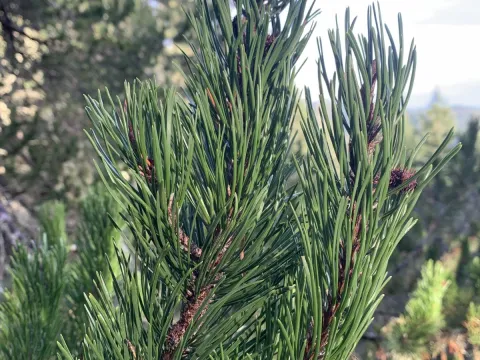
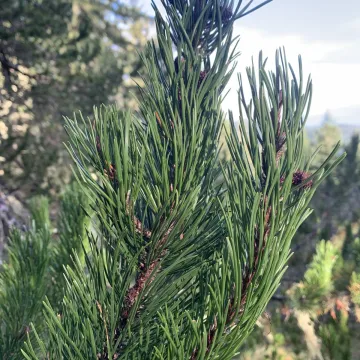
Botanically, the species is identified by its persistent, twisted, paired needles and its unique serotinous cones, which require intense heat to release seeds. The bark is relatively thin, and the root system is extensive, providing stability in exposed, high-altitude environments where the tree is naturally adapted.
Cultivation requirements for Lodgepole pine emphasize full sun exposure and well-draining soil profiles. While the species is drought-tolerant once established, irrigation is critical during the initial growth stages. Proper spacing in plantations is essential to reduce inter-tree competition and improve overall health and vigor of the stand.
Economically, the tree is a primary source of lumber, utility poles, and pulpwood due to its long, straight trunks. Beyond timber production, it is utilized for soil stabilization in mountainous areas and serves as a vital component in reforestation programs aimed at restoring degraded timberlands.
- Susceptibility to mountain pine beetle infestations.
- Risk of western gall rust infection.
- Vulnerability to needle cast diseases in overly humid climates.
Photo gallery