


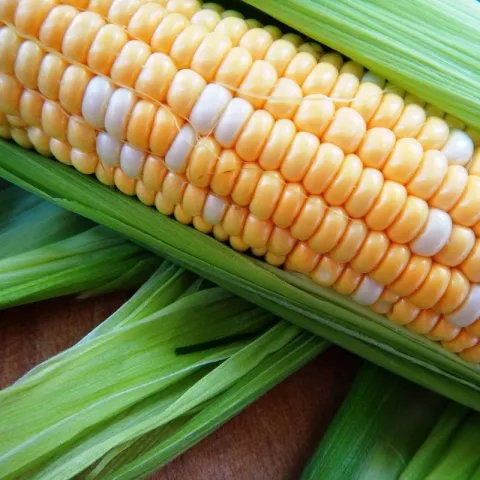


SKU #33084
·
27 views
Sheridan
Corn
VNISUser rating
0 votes0% positive reviews
No ratings yet — be the first.
Hybrid Type
Simple Hybrid
Use Direction
Grain
FAO
380
Kernel Type
Dent
About product

A high-yielding dent corn hybrid featuring a 72% starch content and strong resistance to key diseases and the European corn borer.
Hybrid Type
Simple Hybrid
Use Direction
Grain
FAO
380
Kernel Type
Dent
Description
Stable grain performance for intensive production
The «Sheridan» corn hybrid from VNIS is a targeted solution for agricultural operations focused on high-yield grain production. As a simple hybrid with an FAO rating of 380, it combines robust genetics with advanced breeding techniques to deliver reliable performance in the field.
Agronomic resilience and protection
The primary advantage of the «Sheridan» hybrid lies in its comprehensive resistance profile. It demonstrates strong immunity against major pathogens, including Helminthosporium leaf blight, boil smut, head smut, and Fusarium ear rot. Furthermore, its resistance to the European corn borer is a critical factor for producers looking to minimize stalk lodging and harvest losses, ensuring that the crop remains intact throughout the growing season.
Technical specifications and application
- End-use: Specifically developed for grain production.
- Grain structure: Dent-type grain with a 72% starch content, making it highly competitive for grain processing and feed manufacturing.
- Planting density: A flexible recommendation of 50,000–80,000 plants/ha allows for adjustment based on specific soil moisture availability.
«Sheridan» is designed for producers who employ intensive farming practices. It is best suited for regions where the growing season allows for the full maturation of an FAO 380 hybrid. Unlike early-maturing varieties that prioritize rapid moisture loss in drought-prone areas, «Sheridan» focuses on maximizing grain filling and total dry matter accumulation. It stands out in its class by balancing high productivity with a reduced need for intensive chemical pest management, thanks to its inherent biological resistance.
Crop & resistance
Disease resistance
Pest resistance
Specifications hover over for a hint about the specification
| Hybrid Type | |
|---|---|
|
Use Direction
Use Direction
Dual-purpose hybrids: for silage and grain in all growing regions. These are "stay-green" type hybrids, meaning the plants remain green for a longer period. However, this does not affect the sugar, cellulose, and hemicellulose content, nor the degree of lignification of the plant... |
|
|
FAO
FAO
Corn hybrids are classified by maturity groups and by the FAO number. All corn hybrids are distributed according to the FAO scale. Under Central European conditions, a difference of 10 FAO units between hybrids results in a 1-2 day difference in their maturity. The higher the FAO... |
380 |
|
Kernel Type
Kernel Type
Dent corn (Zea mays indentata) — Large, elongated, flat kernels. The endosperm is horny on the sides of the kernel, mealy in the center and at the top. A depression forms at the top of the kernel upon ripening. Dent corn is the most widely cultivated group among others. Plants ty... |
|
| Starch content, % | 72 |
|
Recommended Density
Recommended Density
Optimal productivity is achieved at a planting density of 4000-5500 plants/ha. Possible planting scheme: 300-500x40-80 cm. |
50000-80000 |
| Catalog | Catalog → Corn |
| Manufacturer | VNIS |
| Originator | Ukrainian Scientific Institute of Plant Breeding |
| Originator | Halushcenko Serhii Valeriiovych, Breus Oksana Serhiivna, Parii IUliia Oleksandrivna, Parii Myroslav Fedorovych, Parii IAroslav Fedorovych, |
| Originator | Limagrain Nederland |
| Patent holder | VNIS |
| Patent holder | Tovarystvo z obmezhenoiu vidpovidalnistiu «Vseukrainskyi naukovyi instytut selektsii (VNIS)» |
| Country | Ukraine |
Store offers
Prices are updated on loadLoading offers…
Aggregator catalog: prices are collected automatically from store websites, normalized by AI and converted at the current exchange rate. Before ordering, confirm the price and availability on the store's website. This block is not indexed by search engines — the data is loaded after the page opens.
See also
Often considered together with this variety


Recently viewed
Similar items in this catalog section







Comments · 0