


SKU #23309
·
26 views
CLOTRAL-ZORYA
Herbicides, Desiccants
LLC "SCIENTIFIC-PRODUCTION ENTERPRISE "UKRA"User rating
0 votes0% positive reviews
No ratings yet — be the first.
Danger Class
3
Form of the preparation
Water-soluble concentrate
By type of action
Systemic herbicide
By application method
Foliar herbicide
About product

A selective systemic herbicide designed for effective broadleaf weed control in fodder beet crops.
Danger Class
3
Form of the preparation
Water-soluble concentrate
By type of action
Systemic herbicide
By application method
Foliar herbicide
Description
Effective Weed Control for Fodder Beet Crops
For agronomists managing fodder beet fields, perennial weeds represent a constant challenge that directly impacts yield. The "Klotrel-Zorya" herbicide, produced by NVP "Ukra", serves as a targeted solution for controlling persistent broadleaf weeds, ensuring the crop can develop without competing for vital nutrients and moisture.
Based on clopyralid, this systemic herbicide acts as a selective agent, allowing it to be used post-emergence on fodder beets. It works by translocating through the leaves deep into the weed's root system, effectively stopping growth in species that are typically hard to control.
Field Application Scenarios
- Eliminating Thistles: Fields infested with Cirsium arvense (creeping thistle) and Sonchus arvensis (perennial sow thistle) require a systemic approach. Klotrel-Zorya penetrates deep into the root tissues to prevent regrowth.
- Ambrosia Control: Ambrosia artemisiifolia (ragweed) is a major threat to agricultural fields. Using this herbicide post-emergence provides the necessary window to clear the crop while it is in the active growth phase.
Technical Guidelines for Use:
- Application Rate: Apply 0.3–0.5 liters per hectare depending on the weed infestation density.
- Operational Efficiency: As a selective, systemic herbicide, it focuses solely on targeted weed species, minimizing stress on the fodder beet crop.
- Safety and Restrictions: Classified under Hazard Class 3. Users must adhere to standard safety protocols for water-soluble concentrates. A pre-harvest interval of 45 days is mandatory to ensure safety standards.
Integrating Klotrel-Zorya into your crop protection strategy allows for precision weed management. By choosing a systemic herbicide that focuses on problematic perennials, growers can optimize their field maintenance schedule and protect the long-term productivity of their fodder beet fields.
Composition
Active ingredients
- Clopyralid гербицид
Application
Used on crops
Against weeds
Specifications hover over for a hint about the specification
| Danger Class | 3 |
|---|---|
| Form of the preparation | |
|
By type of action
By type of action
Depending on their ability to move through living tissues, herbicides are divided into contact and systemic. Contact herbicides cause local damage to plant tissue upon contact, which dies or gradually degrades. This action does not always completely destroy the plant; often, its... |
|
|
By application method
By application method
Based on the method of application, herbicides are divided into foliar, soil, and root herbicides. Foliar herbicides are applied to vegetative plants and act through their above-ground organs. The main method of application for such preparations is spraying using sprayers or airp... |
|
|
By Mode of Action
By Mode of Action
Herbicides are divided into two groups according to their mode of action: Non-selective herbicides — intended for the destruction of all plant species. They are applied in agricultural fields during the absence of the main crop (after harvest, before crop emergence, on fallow lan... |
|
|
By Application Timing
By Application Timing
Herbicides are classified according to application timing into pre-emergent and post-emergent herbicides. Pre-emergent herbicides are mostly soil-applied or granular formulations applied before the emergence of crop plants. They are applied either pre-sowing (during pre-sowing cu... |
|
|
Drug Consumption
Drug Consumption
Mass of the preparation per unit of treated area. It is customary to express the dosage rate in kilograms per hectare. The dosage rate is most often given in terms of 100% active ingredient, although sometimes it is calculated based on the preparation in the form of application w... |
0.3-0.5 |
|
Maximum number of treatments
Maximum number of treatments
Maximum recommended number of treatments per vegetation period. |
1 |
|
Last Processing Date, Days
Last Processing Date, Days
Number of days from processing to harvest cleanup |
45 |
| Catalog | Catalog → Herbicides, Desiccants |
| Manufacturer | LLC "SCIENTIFIC-PRODUCTION ENTERPRISE "UKRA" |
| Applicant | Agrochemical, LLC |
| Country | Ukraine |
Store offers
Prices are updated on loadLoading offers…
Aggregator catalog: prices are collected automatically from store websites, normalized by AI and converted at the current exchange rate. Before ordering, confirm the price and availability on the store's website. This block is not indexed by search engines — the data is loaded after the page opens.
Alternatives
Fodder beet · similar varieties
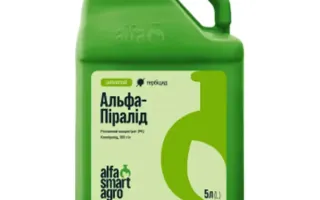


Alpha-Pyradiol w.r.k.
«Юнісіті Ентерпрайсіс Л.П.», Единбург, Великобританія
043 4 offers
4.4 €за 1 л ≈ 225 ₴


MASTAK, RC (Cloquaralid, 300 g/l)
ТОВ «Фабрика агрохімікатів», Черкаси, Україна
038 1 offer
14.66 € ≈ 749 ₴

Steftril, RK (cloquarald, 300 g/l)
ДДЕ Фарм АГ, Тризен, Ліхтенштейн
037 3 offers
15.3 €за 1 л ≈ 781 ₴

Lontrel 300, SL (Lontrel 300, SL)
Доу АгроСайенсіс С.А.С., Друзенхайм, Франція
035 2 offers
49 €за 1 л ≈ 2 502 ₴
See also
Often considered together with this variety





Recently viewed
Similar items in this catalog section
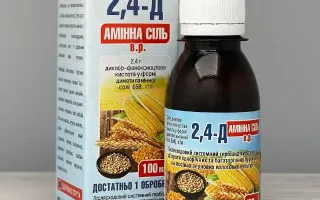


Stomp 330
БАСФ Агро БВ, Швейцарія, на заводі , Франція,Італія (Сієна)
From your browsing history
710.8K 14 offers
13.2 €за 1 л ≈ 674 ₴


Lazurit
ЗАТ Фірма Август, Росія.,селище Вурнари,
From your browsing history
39.1K 11 offers
6.4 €за 1 л ≈ 327 ₴


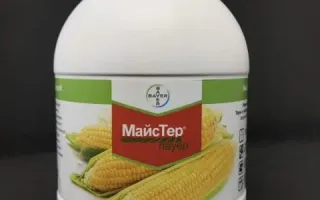
Tornado
ЗАТ Фірма Август, Росія.,селище Вурнари,
From your browsing history
57.8K 8 offers
0.8 €за 1 л ≈ 41 ₴

Comments · 0