


SKU #29970
·
30 views
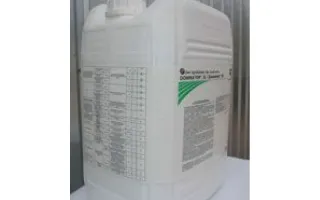
Dicquat M-Zorya, RK, (Dicquat dibromide, 150 g/l)
Herbicides, Desiccants
Agrochemical, LLCUser rating
0 votes0% positive reviews
No ratings yet — be the first.
By application method
Foliar herbicide
By Mode of Action
Non-selective herbicide
By Application Timing
Post-emergence herbicide
Desiccant
Herbicide-Desiccant
About product

Fast-acting desiccant for uniform crop ripening and efficient harvesting.
By application method
Foliar herbicide
By Mode of Action
Non-selective herbicide
By Application Timing
Post-emergence herbicide
Desiccant
Herbicide-Desiccant
Description
Why Diquat M-Zorya is the choice of professionals
In the face of unpredictable weather, where harvesting becomes a race against time, desiccation becomes a critical stage. Diquat M-Zorya (150 g/l) from the Ukrainian manufacturers Agrohimitat and NVP Zorya is a tool for those who do not rely on luck. Unlike systemic herbicides that work gradually, this contact product delivers an immediate effect, essentially 'burning' the green vegetative mass to facilitate harvest.
Efficiency under field conditions
The core feature of this formulation is its high speed of action. Hours after application, the active substance (diquat dibromide) begins to disrupt the cell membranes of weeds and crop plants. For an agronomist, this means:
- Accelerated maturation: Uniform drying of rapeseed, soybean, and sunflower seeds, allowing for harvesting 5-7 days earlier.
- Weed control: Effectively destroys annual broadleaf weeds, preventing them from hindering the combine harvester's performance.
- Loss minimization: Cleaner grain and reduced moisture content, significantly lowering drying costs.
Application tips and warnings
As a non-selective contact herbicide, Diquat M-Zorya requires precision. Its primary goal is to eliminate everything green it touches. Therefore, maintaining the correct volume of the working solution to ensure maximum coverage is essential. The product is optimal for farms cultivating oilseed rape, soybeans, sunflowers, peas, or potatoes. With a 3rd hazard class and a 10-day pre-harvest interval, application should be planned in advance. It starts working even in overcast conditions, but direct sunlight significantly amplifies its potency.
Verdict: Strengths and limitations
The main advantage of this Ukrainian-made product is its adaptation to local climate conditions and reliable performance in tank mixes. Its limitation is the requirement for thorough coverage, as the product does not translocate within the plant (contact action). It is not designed to control perennial rhizomatous weeds, but as a final step before combining, it offers one of the best price-to-performance ratios for professional farming.
Application
Used on crops
Against weeds
Specifications hover over for a hint about the specification
|
By application method
By application method
Based on the method of application, herbicides are divided into foliar, soil, and root herbicides. Foliar herbicides are applied to vegetative plants and act through their above-ground organs. The main method of application for such preparations is spraying using sprayers or airp... |
|
|---|---|
|
By Mode of Action
By Mode of Action
Herbicides are divided into two groups according to their mode of action: Non-selective herbicides — intended for the destruction of all plant species. They are applied in agricultural fields during the absence of the main crop (after harvest, before crop emergence, on fallow lan... |
|
|
By Application Timing
By Application Timing
Herbicides are classified according to application timing into pre-emergent and post-emergent herbicides. Pre-emergent herbicides are mostly soil-applied or granular formulations applied before the emergence of crop plants. They are applied either pre-sowing (during pre-sowing cu... |
|
|
Desiccant
Desiccant
Desiccants (from Latin desicco — dry; desiccans (desiccantis) — drying) are chemical substances used in agriculture for desiccating plants at the root. They can be conditionally classified as herbicides, as they irreversibly affect plants by causing tissue dehydration, ultimately... |
|
| Form of the preparation | |
| Danger Class | 3 |
|
By type of action
By type of action
Depending on their ability to move through living tissues, herbicides are divided into contact and systemic. Contact herbicides cause local damage to plant tissue upon contact, which dies or gradually degrades. This action does not always completely destroy the plant; often, its... |
|
|
Maximum number of treatments
Maximum number of treatments
Maximum recommended number of treatments per vegetation period. |
1 |
|
Last Processing Date, Days
Last Processing Date, Days
Number of days from processing to harvest cleanup |
10 |
| Catalog | Catalog → Herbicides, Desiccants |
| Manufacturer | Agrochemical, LLC |
| Manufacturer | Науково-виробниче підприємство Зоря |
| Applicant | Agrochemical, LLC |
| Country | Ukraine |
Store offers · 6 from 5 stores
Prices are updated on loadLoading offers…
Aggregator catalog: prices are collected automatically from store websites, normalized by AI and converted at the current exchange rate. Before ordering, confirm the price and availability on the store's website. This block is not indexed by search engines — the data is loaded after the page opens.
Alternatives
Winter rapeseed · similar varieties




See also
Often considered together with this variety





Recently viewed
Similar items in this catalog section


Stomp 330
БАСФ Агро БВ, Швейцарія, на заводі , Франція,Італія (Сієна)
From your browsing history
710.8K 14 offers
13.2 €за 1 л ≈ 674 ₴


Lazurit
ЗАТ Фірма Август, Росія.,селище Вурнари,
From your browsing history
39.1K 11 offers
6.4 €за 1 л ≈ 327 ₴


Tornado
ЗАТ Фірма Август, Росія.,селище Вурнари,
From your browsing history
57.8K 8 offers
0.8 €за 1 л ≈ 41 ₴

Comments · 0