


SKU #403
·
4 560 views
Otaman
Herbicides, Desiccants
Wuxi Longbang Chemical & Industrial Co., Ltd.User rating
0 votes0% positive reviews
No ratings yet — be the first.
Last Processing Date, Days
1
By type of action
Systemic herbicide
By application method
Foliar herbicide
By Mode of Action
Non-selective herbicide
About product

A reliable tool for systemic control of perennial weeds and high-quality crop desiccation.
Last Processing Date, Days
1
By type of action
Systemic herbicide
By application method
Foliar herbicide
By Mode of Action
Non-selective herbicide
Description
Otaman: Systemic Weed Control from Emergence to Desiccation
The systemic non-selective herbicide "Otaman" occupies a vital niche as an all-purpose tool for field clearing. Its key advantage is the ability to destroy both the aerial part and the root system of stubborn weeds, such as couch grass and creeping thistle, thanks to the high concentration of glyphosate isopropylamine salt.
Why do farmers choose Otaman?
- Formula Consistency. Produced under the oversight of multiple manufacturing facilities (China, India, Belgium), the product maintains a stable aqueous solution formula that is highly effective against ragweed, pigweed, and cereal volunteers.
- Application Versatility. The product functions not only as a post-emergence herbicide but also as a powerful desiccant. This is critical for crops requiring drying before harvest (sunflower, flax, soy).
- High-Volume Efficiency. An application rate of over 3.0 L/ha ensures deep penetration of the active ingredient into plant tissues, making it optimal for working in fields with dense weed cover.
Pros and Cons
The strength of Otaman lies in its speed and systemic action. It is ideal for farms practicing resource-saving tillage technologies. However, it is essential to consider that as a non-selective herbicide, it does not distinguish between weeds and crops; therefore, application requires precision and adherence to safety measures. The waiting period before mechanical field work is only 1 day, which is convenient for high-intensity agricultural operations.
The product is classified as a Hazard Class 3 substance, which is a standard rating for glyphosate-based herbicides, necessitating the use of personal protective equipment during field operations.
Video · 1 video
Suggest a video →Composition
Active ingredients
- Glyphosate isopropylamine salt гербицид Глифосат
Application
Used on crops
Specifications hover over for a hint about the specification
|
Last Processing Date, Days
Last Processing Date, Days
Number of days from processing to harvest cleanup |
1 |
|---|---|
|
By type of action
By type of action
Depending on their ability to move through living tissues, herbicides are divided into contact and systemic. Contact herbicides cause local damage to plant tissue upon contact, which dies or gradually degrades. This action does not always completely destroy the plant; often, its... |
|
|
By application method
By application method
Based on the method of application, herbicides are divided into foliar, soil, and root herbicides. Foliar herbicides are applied to vegetative plants and act through their above-ground organs. The main method of application for such preparations is spraying using sprayers or airp... |
|
|
By Mode of Action
By Mode of Action
Herbicides are divided into two groups according to their mode of action: Non-selective herbicides — intended for the destruction of all plant species. They are applied in agricultural fields during the absence of the main crop (after harvest, before crop emergence, on fallow lan... |
|
|
By Application Timing
By Application Timing
Herbicides are classified according to application timing into pre-emergent and post-emergent herbicides. Pre-emergent herbicides are mostly soil-applied or granular formulations applied before the emergence of crop plants. They are applied either pre-sowing (during pre-sowing cu... |
|
| Form of the preparation | |
|
Drug Consumption
Drug Consumption
Mass of the preparation per unit of treated area. It is customary to express the dosage rate in kilograms per hectare. The dosage rate is most often given in terms of 100% active ingredient, although sometimes it is calculated based on the preparation in the form of application w... |
More than 3.0 L/ha |
|
Desiccant
Desiccant
Desiccants (from Latin desicco — dry; desiccans (desiccantis) — drying) are chemical substances used in agriculture for desiccating plants at the root. They can be conditionally classified as herbicides, as they irreversibly affect plants by causing tissue dehydration, ultimately... |
|
| Danger Class | 3 |
| Catalog | Catalog → Herbicides, Desiccants |
| Manufacturer | Wuxi Longbang Chemical & Industrial Co., Ltd. |
| Manufacturer | Excel Crop Care Limited |
| Manufacturer | Excel Crop Care (Europe) NV |
| Applicant | Alpha-Chimgroup, LLC |
| Country | Belgium |
Store offers · 9 from 8 stores
Prices are updated on loadLoading offers…
Aggregator catalog: prices are collected automatically from store websites, normalized by AI and converted at the current exchange rate. Before ordering, confirm the price and availability on the store's website. This block is not indexed by search engines — the data is loaded after the page opens.
Alternatives
Fodder beet · similar varieties



Pilaround
Піларквім (Шанхай) Ко., Лтд. (Pilarquim (Shanghai) Co, LTD), Шанхай, Китай
02.2K 3 offers
8.1 €за 1 л ≈ 414 ₴


See also
Often considered together with this variety


Recently viewed
Similar items in this catalog section


Stomp 330
БАСФ Агро БВ, Швейцарія, на заводі , Франція,Італія (Сієна)
From your browsing history
710.8K 14 offers
13.2 €за 1 л ≈ 674 ₴


Lazurit
ЗАТ Фірма Август, Росія.,селище Вурнари,
From your browsing history
39.1K 11 offers
6.4 €за 1 л ≈ 327 ₴


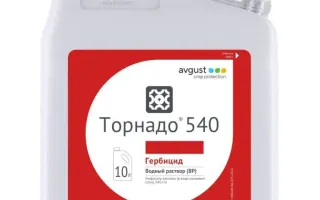
Tornado
ЗАТ Фірма Август, Росія.,селище Вурнари,
From your browsing history
57.8K 8 offers
0.8 €за 1 л ≈ 41 ₴

Comments · 0