


SKU #19897
·
52 views
Klinor
Herbicides, Desiccants
Agrochemical, LLCUser rating
0 votes0% positive reviews
No ratings yet — be the first.
By type of action
Systemic herbicide
By application method
Soil herbicide, Foliar herbicide
By Mode of Action
Non-selective herbicide
By Application Timing
Pre-emergence herbicide, Post-emergence herbicide
About product

A reliable solution for total control of perennial weeds and high-quality crop desiccation.
By type of action
Systemic herbicide
By application method
Soil herbicide, Foliar herbicide
By Mode of Action
Non-selective herbicide
By Application Timing
Pre-emergence herbicide, Post-emergence herbicide
Description
Field cleaning: understanding the potential of the 'Clinor' herbicide
When dealing with field infestation by perennial rhizomatous weeds such as couch grass or field thistle, the fight turns into a long-term strategic operation. Clinor, a systemic non-selective herbicide based on glyphosate, was designed precisely for scenarios where the field needs a radical cleanup before sowing or an effective desiccation process.
Advantages and Versatility
Unlike selective products that work on a targeted basis, Clinor eliminates almost all growing vegetation. Key strengths include:
- Comprehensive impact: The product effectively handles both annuals and hard-to-eradicate perennial weeds like bindweed, couch grass, and thistle.
- Application flexibility: Thanks to its dual nature as a foliar and soil-applied herbicide, Clinor is suitable for pre-emergence treatment and controlled weed destruction in fields where application equipment can be safely managed.
- Desiccation: Beyond its herbicidal function, it serves as an effective desiccant, helping to dry out crops like sunflower and soybean before harvesting, which accelerates maturity and simplifies combining.
The water-soluble concentrate formula ensures ease of solution preparation, and the wide spectrum of compatible crops—ranging from vegetables and ornamentals to industrial crops—makes Clinor a versatile tool on any farm.
Things to keep in mind
Given its non-selective nature, the main risk when using Clinor is accidental contact with crops. It should not be used during the active growth phase of the main crop without protective shields. Remember that maximum efficiency is achieved with a single treatment. After application, wait at least 7 days before performing other agricultural operations on the plot.
Who is this product for? Clinor is an optimal choice for farmers dealing with neglected fields and those aiming for maximum soil clearance from perennials before planting high-yield crops. It is the go-to solution for those who rely on a proven 'root-to-tip' results.
Composition
Active ingredients
- Glyphosate гербицид
Application
Used on crops
Specifications hover over for a hint about the specification
|
By type of action
By type of action
Depending on their ability to move through living tissues, herbicides are divided into contact and systemic. Contact herbicides cause local damage to plant tissue upon contact, which dies or gradually degrades. This action does not always completely destroy the plant; often, its... |
|
|---|---|
|
By application method
By application method
Based on the method of application, herbicides are divided into foliar, soil, and root herbicides. Foliar herbicides are applied to vegetative plants and act through their above-ground organs. The main method of application for such preparations is spraying using sprayers or airp... |
|
|
By Mode of Action
By Mode of Action
Herbicides are divided into two groups according to their mode of action: Non-selective herbicides — intended for the destruction of all plant species. They are applied in agricultural fields during the absence of the main crop (after harvest, before crop emergence, on fallow lan... |
|
|
By Application Timing
By Application Timing
Herbicides are classified according to application timing into pre-emergent and post-emergent herbicides. Pre-emergent herbicides are mostly soil-applied or granular formulations applied before the emergence of crop plants. They are applied either pre-sowing (during pre-sowing cu... |
|
| Form of the preparation | |
| Danger Class | 3 |
|
Drug Consumption
Drug Consumption
Mass of the preparation per unit of treated area. It is customary to express the dosage rate in kilograms per hectare. The dosage rate is most often given in terms of 100% active ingredient, although sometimes it is calculated based on the preparation in the form of application w... |
2-8 |
|
Maximum number of treatments
Maximum number of treatments
Maximum recommended number of treatments per vegetation period. |
1 |
|
Last Processing Date, Days
Last Processing Date, Days
Number of days from processing to harvest cleanup |
7 |
|
Desiccant
Desiccant
Desiccants (from Latin desicco — dry; desiccans (desiccantis) — drying) are chemical substances used in agriculture for desiccating plants at the root. They can be conditionally classified as herbicides, as they irreversibly affect plants by causing tissue dehydration, ultimately... |
|
| Catalog | Catalog → Herbicides, Desiccants |
| Manufacturer | Agrochemical, LLC |
| Manufacturer | China National Complete Engineering Corporation |
| Manufacturer | Hangzhou Ruijiang Chemical Co., Ltd. |
| Manufacturer | Zhejiang Dayo Chemical Industrial |
| Manufacturer | Agricopter Asia Limited |
| Applicant | Vassma-Chemical, LLC |
| Country | China |
Store offers
Prices are updated on loadLoading offers…
Aggregator catalog: prices are collected automatically from store websites, normalized by AI and converted at the current exchange rate. Before ordering, confirm the price and availability on the store's website. This block is not indexed by search engines — the data is loaded after the page opens.
Alternatives
Vegetables · similar varieties


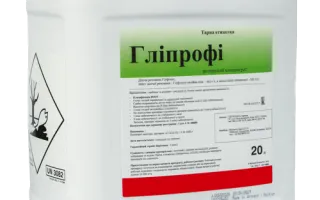


Ekstraklin 607
Фадер Альянс Лтд., Великобританія (Fader Alliance Ltd., England) на заводах Нідерландів, Польщі
045 1 offer
0.2 €за 1 л ≈ 10 ₴


Napalm, RK (Glyphosate isopropylamine salt, 480 g/l)
Hangzhou Ruijiang Chemical Co., Ltd.
034 4 offers
3.2 €за 1 л ≈ 163 ₴
See also
Often considered together with this variety




Recently viewed
Similar items in this catalog section


Stomp 330
БАСФ Агро БВ, Швейцарія, на заводі , Франція,Італія (Сієна)
From your browsing history
710.8K 14 offers
13.2 €за 1 л ≈ 674 ₴


Lazurit
ЗАТ Фірма Август, Росія.,селище Вурнари,
From your browsing history
39.1K 11 offers
6.4 €за 1 л ≈ 327 ₴


Tornado
ЗАТ Фірма Август, Росія.,селище Вурнари,
From your browsing history
57.8K 8 offers
0.8 €за 1 л ≈ 41 ₴

Comments · 0