


SKU #23431
·
42 views
Neo, w.r.g., (nicosulfuron, 750 g/kg)
Herbicides, Desiccants
Shanghai Mio Chemical Co., Ltd.User rating
0 votes0% positive reviews
No ratings yet — be the first.
Form of the preparation
Water-soluble granules
Danger Class
3
By type of action
Systemic herbicide
By application method
Foliar herbicide
About product

A high-concentration systemic herbicide for selective control of perennial grasses and broad-leaved weeds in maize.
Form of the preparation
Water-soluble granules
Danger Class
3
By type of action
Systemic herbicide
By application method
Foliar herbicide
Description
Effective Weed Control in Maize Crops
Neo, w.r.g., featuring a high concentration of nicosulfuron (750 g/kg), is a robust systemic herbicide designed for post-emergence weed management in maize fields. Agronomists rely on this formulation to control stubborn perennial grasses, such as quackgrass, alongside a wide range of broad-leaved weeds that threaten crop yields.
The product comes in the form of water-dispersible granules, which ensures easy preparation and quick solubility in the spray tank. Once applied, the active ingredient is rapidly absorbed through the leaves, systemically inhibiting weed growth by blocking cell division. Visual symptoms of control, such as chlorosis and growth stunting, appear within 3 to 5 days of application.
Field Application Scenarios
- Eradication of Perennial Grasses: The high-strength nicosulfuron concentration is particularly effective against rhizomatous weeds like quackgrass, which aggressively compete with maize for essential soil nutrients and moisture.
- Broad-Spectrum Performance: Neo, w.r.g. handles common problem species such as redroot pigweed, common ragweed, and knotweed with precision, preventing them from dominating the canopy.
- Optimal Timing for Crop Safety: For maximum efficacy and selectivity, the product is best applied when the maize crop is at the 3 to 6-leaf stage. This ensures the weeds are in their active growth phase while the crop is resilient to the treatment.
By integrating this selective herbicide into a standard crop protection program, farmers can significantly reduce weed pressure during the critical window of crop development without risking phytotoxicity, provided the standard application guidelines are followed.
Composition
Active ingredients
- Nicosulfuron гербицид Производные сульфонилмочевины
Application
Used on crops
Specifications hover over for a hint about the specification
| Form of the preparation | |
|---|---|
| Danger Class | 3 |
|
By type of action
By type of action
Depending on their ability to move through living tissues, herbicides are divided into contact and systemic. Contact herbicides cause local damage to plant tissue upon contact, which dies or gradually degrades. This action does not always completely destroy the plant; often, its... |
|
|
By application method
By application method
Based on the method of application, herbicides are divided into foliar, soil, and root herbicides. Foliar herbicides are applied to vegetative plants and act through their above-ground organs. The main method of application for such preparations is spraying using sprayers or airp... |
|
|
By Mode of Action
By Mode of Action
Herbicides are divided into two groups according to their mode of action: Non-selective herbicides — intended for the destruction of all plant species. They are applied in agricultural fields during the absence of the main crop (after harvest, before crop emergence, on fallow lan... |
|
|
By Application Timing
By Application Timing
Herbicides are classified according to application timing into pre-emergent and post-emergent herbicides. Pre-emergent herbicides are mostly soil-applied or granular formulations applied before the emergence of crop plants. They are applied either pre-sowing (during pre-sowing cu... |
|
| Catalog | Catalog → Herbicides, Desiccants |
| Manufacturer | Shanghai Mio Chemical Co., Ltd. |
| Manufacturer | Clove (Shanghai) Co., Ltd. |
| Applicant | Ekspoprodkom, LLC |
| Country | China |
Store offers · 1 from 1 stores
Prices are updated on loadLoading offers…
Aggregator catalog: prices are collected automatically from store websites, normalized by AI and converted at the current exchange rate. Before ordering, confirm the price and availability on the store's website. This block is not indexed by search engines — the data is loaded after the page opens.
Alternatives
Corn · similar varieties


Harmonik WG
Nanjing No.1 Pesticide Factory of Red Sun Group Co., Ltd.
01.6K 6 offers
145.6 €за 1 л ≈ 7 434 ₴
Formula
China National Chemical Construction Ningbo Import & Export Co.
01.4K 7 offers
2.8 €за 1 л ≈ 143 ₴


See also
Often considered together with this variety




Recently viewed
Similar items in this catalog section


Stomp 330
БАСФ Агро БВ, Швейцарія, на заводі , Франція,Італія (Сієна)
From your browsing history
710.8K 14 offers
13.2 €за 1 л ≈ 674 ₴


Lazurit
ЗАТ Фірма Август, Росія.,селище Вурнари,
From your browsing history
39.1K 11 offers
6.4 €за 1 л ≈ 327 ₴


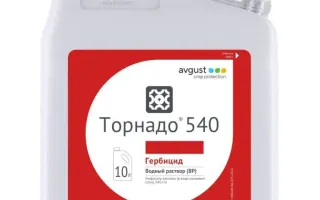
Tornado
ЗАТ Фірма Август, Росія.,селище Вурнари,
From your browsing history
57.8K 8 offers
0.8 €за 1 л ≈ 41 ₴

Comments · 0