


SKU #21394
·
25 views
Sapphire, EC
Herbicides, Desiccants
Sharda CropchemUser rating
0 votes0% positive reviews
No ratings yet — be the first.
Form of the preparation
Emulsion concentrate
Maximum number of treatments
1
Drug Consumption
From 1.0 - 2.0 L/ha
Danger Class
2
About product

Reliable protection for corn and sunflower during early growth stages without excessive costs.
Form of the preparation
Emulsion concentrate
Maximum number of treatments
1
Drug Consumption
From 1.0 - 2.0 L/ha
Danger Class
2
Description
Why «Sapfir, CE» has become a staple for crop protection
When dealing with soil-applied herbicides, the primary criterion is result predictability. When working with acetochlor, it is essential to understand that this systemic product from Sharda Cropchem gives you a head start at the most critical stage of corn and sunflower development. We use it as an «insurance policy» for our fields: it blocks weed germination before they can compete with crops for moisture and nutrients.
Application and efficacy
As an operator, I note that the emulsifiable concentrate formulation is quite stable in tank mixes, provided you follow the correct component sequence. The spray solution spreads evenly, creating a «protective barrier». Key points for fieldwork:
- Dosage: the 1.0–2.0 l/ha range allows for flexibility based on soil type. On heavy, high-humus soils, we always aim for the upper limit, while on lighter soils, we reduce the rate to prevent phytotoxicity.
- Timing: the product is strictly pre-emergence. If you miss the window and weeds have already sprouted, the efficacy drops sharply. «Sapfir, CE» works by staying ahead of the weeds.
- Spectrum control: its systemic action effectively eliminates major annual broadleaf and grass weeds. This frees up time for other agrotechnical operations, as row crops require clean inter-row spaces during early development.
Important considerations
The Hazard Class 3 requires standard safety precautions when operating the sprayer. A single application ensures clean seedling emergence, which saves resources on subsequent inter-row cultivations. My top advice for those planning to use this herbicide: soil moisture is crucial. Acetochlor is activated specifically in the moist layer, so dry soil can minimize your efforts. If the weather forecast calls for drought, try to apply the product immediately after seeding, while moisture is still present in the soil horizon.
Overall, it is a reliable tool in an agronomist's arsenal that, when used with proper technique, delivers consistently clean fields without the extra cost of mechanical weed removal.
Composition
Active ingredients
- Acetochlor гербицид Хлорацетамиды (Производные аминокислот)
Application
Against weeds
Specifications hover over for a hint about the specification
| Form of the preparation | |
|---|---|
|
Maximum number of treatments
Maximum number of treatments
Maximum recommended number of treatments per vegetation period. |
1 |
|
Drug Consumption
Drug Consumption
Mass of the preparation per unit of treated area. It is customary to express the dosage rate in kilograms per hectare. The dosage rate is most often given in terms of 100% active ingredient, although sometimes it is calculated based on the preparation in the form of application w... |
From 1.0 - 2.0 L/ha |
| Danger Class | 2 |
|
By type of action
By type of action
Depending on their ability to move through living tissues, herbicides are divided into contact and systemic. Contact herbicides cause local damage to plant tissue upon contact, which dies or gradually degrades. This action does not always completely destroy the plant; often, its... |
|
|
By application method
By application method
Based on the method of application, herbicides are divided into foliar, soil, and root herbicides. Foliar herbicides are applied to vegetative plants and act through their above-ground organs. The main method of application for such preparations is spraying using sprayers or airp... |
|
|
By Mode of Action
By Mode of Action
Herbicides are divided into two groups according to their mode of action: Non-selective herbicides — intended for the destruction of all plant species. They are applied in agricultural fields during the absence of the main crop (after harvest, before crop emergence, on fallow lan... |
|
|
By Application Timing
By Application Timing
Herbicides are classified according to application timing into pre-emergent and post-emergent herbicides. Pre-emergent herbicides are mostly soil-applied or granular formulations applied before the emergence of crop plants. They are applied either pre-sowing (during pre-sowing cu... |
|
| Catalog | Catalog → Herbicides, Desiccants |
| Manufacturer | Sharda Cropchem |
| Country | India |
Store offers
Prices are updated on loadLoading offers…
Aggregator catalog: prices are collected automatically from store websites, normalized by AI and converted at the current exchange rate. Before ordering, confirm the price and availability on the store's website. This block is not indexed by search engines — the data is loaded after the page opens.
Alternatives
Sunflower · similar varieties


See also
Often considered together with this variety





Recently viewed
Similar items in this catalog section
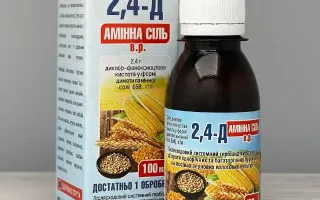


Stomp 330
БАСФ Агро БВ, Швейцарія, на заводі , Франція,Італія (Сієна)
From your browsing history
710.8K 14 offers
13.2 €за 1 л ≈ 674 ₴


Lazurit
ЗАТ Фірма Август, Росія.,селище Вурнари,
From your browsing history
39.1K 11 offers
6.4 €за 1 л ≈ 327 ₴


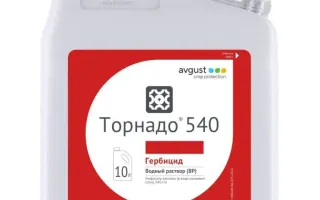
Tornado
ЗАТ Фірма Август, Росія.,селище Вурнари,
From your browsing history
57.8K 8 offers
0.8 €за 1 л ≈ 41 ₴

Comments · 0