




SKU #4311
·
453 views
Stranger
Plum
User rating
0 votes0% positive reviews
No ratings yet — be the first.
Type of Sort
Chinese Loquat
About product

Variety selected by the Buryat Fruit and Berry Experimental Station. Selected among seedlings from open pollination of Ulmus ulmoides. Authors: S.P. Vaulina, G.T. Kirgizova, Z.G. Sokratova, N.N. Platonova, A.S. Sholokhova, T.I. Prokofyeva. Introduced into the State Register in 1998 for the East Siberian region. Medium-sized, fast-growing tree with a round, drooping, moderately dense crown. Predom…
Type of Sort
Chinese Loquat
Description
Variety selected by the Buryat Fruit and Berry Experimental Station. Selected among seedlings from open pollination of Ulmus ulmoides. Authors: S.P. Vaulina, G.T. Kirgizova, Z.G. Sokratova, N.N. Platonova, A.S. Sholokhova, T.I. Prokofyeva. Introduced into the State Register in 1998 for the East Siberian region.
Medium-sized, fast-growing tree with a round, drooping, moderately dense crown. Predominant type of fruiting is cluster branches. Bark is light gray and flaking. Medium-sized shoots with drooping tips, bark is vivid purple, without pubescence. Many stipules, white, elongated shape. Leaves are large, elongated-oval, light green on one-year shoots, dark green on others, bare. Leaf blade is concave with a sharply pointed apex, without pubescence. Leaf margin is serrated, petiole short (1.1 cm), with vivid purple pigmentation. Inflorescence is umbel, flowers white, medium-sized. Petals are oval, well spread, 7 mm long, 5 mm wide, 20-25 stamens, equal or slightly longer than pistil, calyx green, without pubescence.
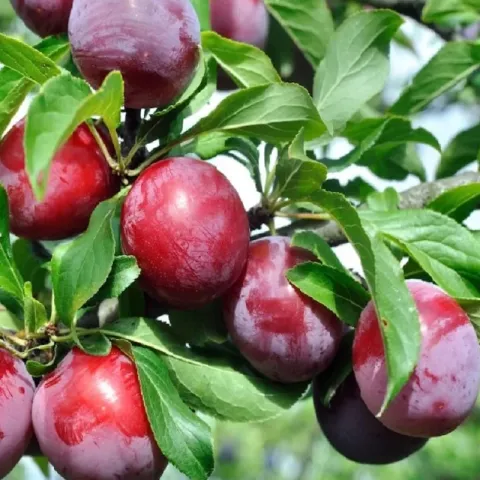
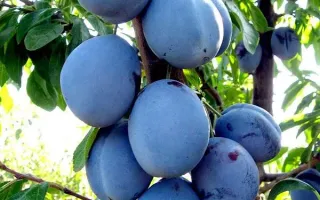
Fruits are large, medium-sized, medium weight 17 g, maximum 21 g, irregularly round shape. Fruit apex elongated, depression narrow and deep, ventral suture distinct. Fruit stalk medium-sized, easily separates from branch, attachment to stone is weak. Fruit color is greenish-yellow, covering the entire surface with a burgundy coating. Subcutaneous dots are clearly visible, white. Skin is medium, bare, covered with a wax layer that peels off easily. Flesh is yellow-green, juicy, slightly fibrous, tart-sweet flavor. Stone separates easily from flesh, medium size, reverse-egg-shaped, elongated, grooved, average weight 4.6% of the flesh.
Fruit appearance rating 4.5 points, aromatic, tart-sweet, overall fruit quality rating 4.6 points. Fruits contain 14.6% dry matter, 5.9% sugars, 1.9% titratable acids, 16.5 mg/100g ascorbic acid, 412.2 mg/100g P-active substances. Transportability is good. Fruits harvested at color development ripen indoors. Storage duration 10-12 days.
Average flowering period: May 23 to June 4; fruit ripening: September 1-5. Begins fruiting at 5 years after grafting in nurseries. Average lifespan 25-30 years. Self-sterile. Annual fruiting, abundant every other year, average yield per tree 8 kg, maximum 17 kg, average yield 45.8 centners/ha. Good winter hardiness. In severe winters, individual skeletal branches may freeze. Flower buds freeze up to 40%. Tolerates spring frosts down to -3ºC. Damaged by Ulmus leafminer under conditions of extremely dry climate up to 4 points.
Important condition for commercial plantings — careful selection of location for plum plantations. Suitable locations include elevated areas, slopes, protected from prevailing winds.
Advantages: winter-hardy, high-yielding variety.
Disadvantages: late-ripening fruits.
Crop & resistance
Crop
Specifications
| Type of Sort | |
|---|---|
| Catalog | Catalog → Plum |
Store offers · 5 from 5 stores
Prices are updated on loadLoading offers…
Aggregator catalog: prices are collected automatically from store websites, normalized by AI and converted at the current exchange rate. Before ordering, confirm the price and availability on the store's website. This block is not indexed by search engines — the data is loaded after the page opens.
Alternatives
European plum · similar varieties




See also
Often considered together with this variety




Recently viewed
Similar items in this catalog section


Comments · 0