

Description
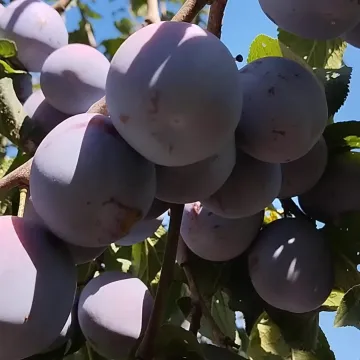
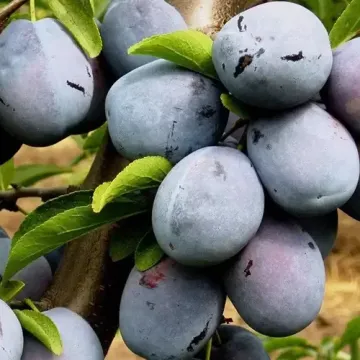
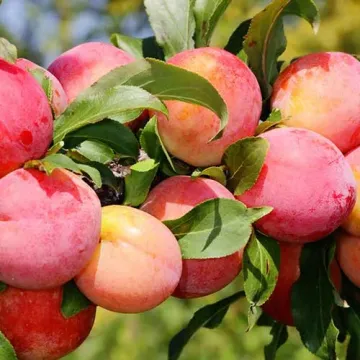
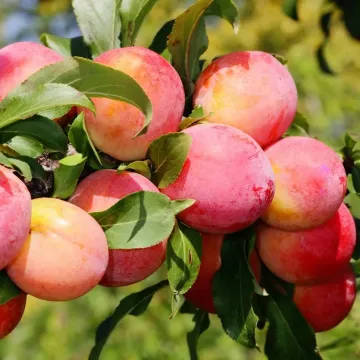
European plum (Prunus domestica L.) is a significant agricultural fruit crop belonging to the Rosaceae family. It is widely cultivated for its high-quality stone fruits and is considered one of the most versatile trees in temperate horticulture, prized for its productivity and adaptability to diverse environments.
Originating from the Caucasus and the Near East, the species has a long history of domestication. It is now cultivated across the temperate regions of the Northern Hemisphere, where climate and soil conditions allow for the vigorous growth of this species in commercial orchards and private gardens.
Botanically, it is characterized by its deciduous nature, oval-shaped leaves, and white flowers that bloom in early spring. The fruit is a drupe, which varies significantly in color, texture, and sugar content depending on the cultivar, making it a staple crop for both fresh consumption and culinary processing.
Successful cultivation requires deep, fertile, and well-drained soils, as the trees are sensitive to waterlogging. Standard agricultural practices include regular pruning to maintain an open canopy for light penetration, balanced fertilization, and consistent irrigation during critical fruit development stages to ensure quality.
Beyond its culinary utility, the European plum is susceptible to various pests, including San Jose scale, leaf-curling midges, and various moth larvae like the meadow moth. Effective management strategies involve monitoring pest populations and applying integrated pest management (IPM) to maintain tree health and crop integrity.
Content graph
Crop pests · 36
Alfalfa seed chalcidAphidBeet flea beetleBeet webwormCereal leaf beetleCodling mothCotton bollwormDiamondback mothEuropean corn borerFrit flies and cereal fliesGall midgesGrape phylloxeraGreen apple aphidGreenhouse whiteflyHop flea beetleLarge whiteLeafhoppersLeaf miner mothLeaf minersMealy plum aphidOriental fruit mothPea aphidPea weevilPollen beetlePotato tuber mothPyralid mothsSan Jose scaleSawfliesSoft scalesSucking pestsSucking pests complexSunn pestTwo-spotted spider miteVine mothWeevilWheat beetle
Контент-граф
Connections · European plum
Most often together:
Marketplace
Products · 242
All 242
Plum 150
Insecticides, Acaricides 55
Fungicides 25
Herbicides, Desiccants 5
Fertilizers 5
Plant Growth Regulator 2





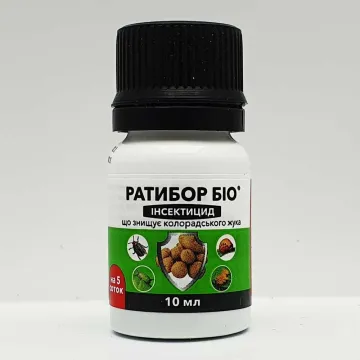
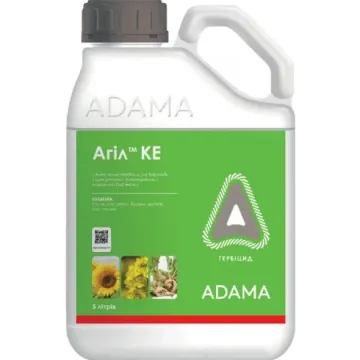
Agil 100
F.A.GAN Chemical Manufacturers Ltd. Israel, member
Herbicides, Desiccants
0
0
·
2.3K
14 offers
16.4 €за 1 л
Купить


Puska
Три Дельта Компані Інтернешнл, Гонконг, Китай.
Insecticides, Acaricides
1
0
·
1.8K
1 offer
0.4 €за 1 л
Купить


Total
Санрайз Кемікалз Ко. Лтд., Шанхай, Китай
Herbicides, Desiccants
0
0
·
1.5K
23 offers
3.5 €за 1 л
Купить



Bisha
Yangzhou Pioneer Chemical Co., Ltd.
Insecticides, Acaricides
0
0
·
1.1K
6 offers
0.7 €за 1 л
Купить







Graphis
Три Дельта Компані Інтернешнл, Гонконг, Китай.
Insecticides, Acaricides
0
3
·
734
2 offers
26.7 €за 1 л
Купить


Kordon
Три Дельта Компані Інтернешнл, Гонконг, Китай.
Insecticides, Acaricides
0
0
·
654
2 offers
6.6 €за 1 л
Купить


