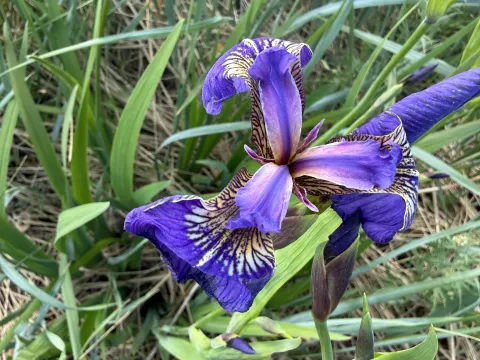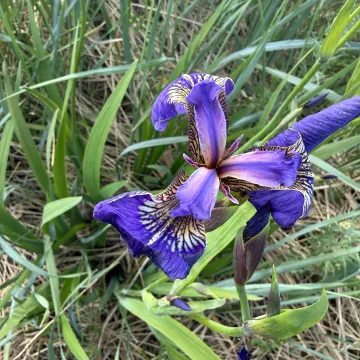
Bristle-pointed iris
Iris setosa Pall. ex Link
Description
The bristle-pointed iris, scientifically known as Iris setosa, is a perennial flowering plant belonging to the Iridaceae family. This species is highly valued for its extreme hardiness, being one of the few iris species capable of thriving in harsh arctic and subarctic climates.
Its native range spans the northern regions of the globe, including Siberia, Alaska, and East Asia. The plant is naturally found in habitats such as coastal meadows, swampy areas, and wet forests, reflecting its biological preference for consistently moist and cool environments.
Botanically, the plant develops from a sturdy, branched rhizome. It features upright stems and sword-shaped foliage. The flowers are distinctive for having reduced inner perianth segments that look like bristles, which is the defining characteristic that gives the species its scientific name.
Cultivation requires specific conditions to mimic its natural environment. It performs best in fertile, humus-rich soil that retains moisture well. It is essential to ensure that the site does not dry out completely during the growing season. Propagation is typically done by rhizome division in early spring or autumn.
The primary use of Iris setosa is in ornamental landscaping, particularly for water gardens and rain gardens where soil moisture is high. The plant is relatively resistant to pests, but it may suffer from rhizome rot if grown in stagnant water or poor drainage conditions. Regular monitoring for leaf spot diseases is recommended.
Photo gallery