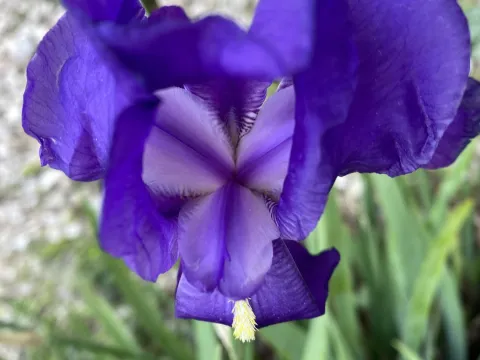

Sweet iris
Iris pallida Lam.
Description
Sweet iris (Iris pallida Lam.), belonging to the Iridaceae family, is a significant agricultural crop valued primarily for its aromatic rhizomes. Unlike many other iris species grown strictly for ornamental purposes, this plant is an essential resource for the high-end perfume and cosmetic industries.
Originating from the rocky slopes of the Dalmatian coast and Italy, the plant is well-adapted to Mediterranean-type climates. Commercial cultivation is concentrated in regions that offer high solar radiation and well-drained soils, which are critical for the accumulation of irones, the key chemical compounds found in the rhizomes.
Botanically, the plant is characterized by its glaucous, sword-shaped leaves and large, fragrant, pale blue to lavender flowers. The rhizome system is robust and perennial; however, it requires a period of three to four years to reach the necessary concentration of aromatic compounds required for professional extraction.
Cultivation requires strict adherence to soil management, preferring calcareous, neutral, or slightly alkaline soils with excellent drainage. Agronomists emphasize that waterlogging is the primary cause of crop failure. Regular inter-row cultivation is necessary to maintain soil aeration and control weed populations, which compete for nutrients.
The primary economic output of Iris pallida is orris root. After harvesting, the rhizomes are cleaned, dried, and aged for several years. This process is vital for the development of the characteristic violet scent. In addition to perfumery, extracts are utilized in traditional medicine and as stabilizing agents in chemical formulations.
- Soft rot (Erwinia carotovora) — the most critical bacterial disease.
- Leaf spot diseases caused by various fungal pathogens.
- Pests: iris borer, aphids, and root-feeding insects like wireworms.
Photo gallery