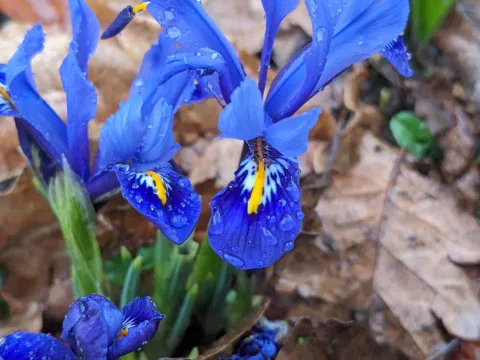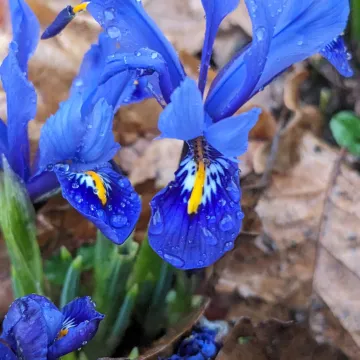
Netted iris
Iris reticulata M. Bieb.
Description
The Netted iris (Iris reticulata) is a charming bulbous perennial species belonging to the Iridaceae family. Highly valued by gardeners as one of the earliest spring harbingers, it typically blooms as soon as the snow melts. This culture is characterized by its compact size and vibrant, fragrant flowers, making it a staple for early spring landscapes in temperate zones.
Native to the Caucasus, Turkey, and Iran, the Netted iris naturally inhabits rocky mountain slopes and hillsides. These wild ancestors have shaped the plant's current agricultural needs, favoring environments that mimic well-drained, sunny, and airy locations. Historically, it has been integrated into horticultural practices specifically to provide early visual interest before perennials and shrubs fully awaken.
Botanically, the plant is distinguished by a bulb covered in a distinct reticulated (net-like) tunic, which provides protection from moisture loss. The flower stalks are short, often emerging just inches from the ground, accompanied by slender, quadrangular foliage that continues to grow after the flowers fade. The blossoms themselves display a vivid array of blues, purples, and yellows, providing a significant splash of color in early spring.
Successful cultivation relies heavily on agricultural practices that manage soil moisture during the summer dormant season. Netted irises require excellent drainage to prevent bulb rot; heavy clay soils should be amended with grit or sand. Planting should occur in the autumn, ensuring the bulbs are placed in a sunny location that avoids waterlogging during winter dormancy. Following the blooming cycle, the foliage must be allowed to yellow and wither naturally to ensure proper bulb development for the next year.
The primary horticultural and economic use of Iris reticulata is within the ornamental nursery industry and for private gardening, specifically for:
- Rock gardens and alpine garden design;
- Early season container gardening;
- Naturalizing in lawns and beneath deciduous trees;
- Commercial winter forcing for early spring trade.
Common health issues include fungal pathogens such as ink disease and various forms of bulb rot, often triggered by excessive soil moisture. Pest pressure can include voles, which find the bulbs appetizing, and aphids or bulb mites. Adopting a strict sanitation routine, ensuring optimal drainage, and performing regular soil cultivation are the best strategies for managing health and maintaining the vitality of these delightful spring bulbs.
Photo gallery