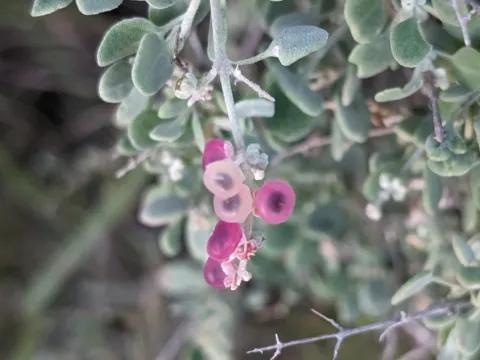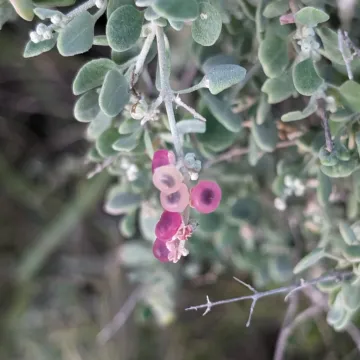
Berry saltbush
Chenopodium spinescens (R. Br.) S. Fuentes & Borsch
Description
Berry saltbush (Chenopodium spinescens) is a perennial semi-shrub belonging to the Amaranthaceae family. Known for its remarkable resilience, this plant has evolved to thrive in harsh, saline, and arid environments where conventional agriculture is rarely feasible, making it a subject of interest for sustainable land management.
The species is native to arid regions of Australia, where it has adapted to fluctuating water availability and poor soil conditions. Its natural distribution is largely concentrated in semiarid zones where the plant acts as a key species for stabilizing landscapes and protecting fragile topsoil from erosion.
Botanically, Chenopodium spinescens is characterized by its woody base, complex branching structure, and the presence of thorns. The plant is a classified halophyte, meaning it can accumulate and manage high salt concentrations in its tissues, allowing it to maintain metabolic functions even in salty, nutrient-poor substrates.
Cultivation requires specific conditions: excellent drainage is mandatory to prevent root rot, as the plant is highly sensitive to waterlogging. It demands full sun exposure and performs best in sandy or silty soils. Agrotechnical management is relatively low, focusing primarily on site selection and ensuring the plants are not overwhelmed by faster-growing competitive weeds during establishment.
The primary economic use of this culture involves land restoration and the development of livestock feed in arid rangelands. Because of its drought tolerance, it serves as a valuable forage reserve when other pasture species decline during dry seasons. Additionally, it contributes significantly to carbon sequestration and the maintenance of biodiversity in challenging desert ecosystems.
- High salt tolerance (halophytic properties).
- Exceptional drought resistance.
- Prevents wind-driven soil erosion.
- Requires minimal chemical inputs.
Photo gallery