Quinoa
Chenopodium quinoa Willd.
Description
Quinoa (Chenopodium quinoa Willd.) is an annual pseudocereal crop belonging to the Amaranthaceae family. Known for its exceptional nutritional profile, it is classified as a complete protein source because it contains all nine essential amino acids, making it a highly valuable crop for both modern human consumption and animal fodder.
Originating from the Andean regions of South America, quinoa was a staple crop for ancient civilizations due to its ability to thrive in harsh, high-altitude climates. Today, its cultivation has spread globally, as breeders develop cultivars adapted to varying latitudes and environmental conditions, proving its versatility beyond its ancestral mountain habitat.
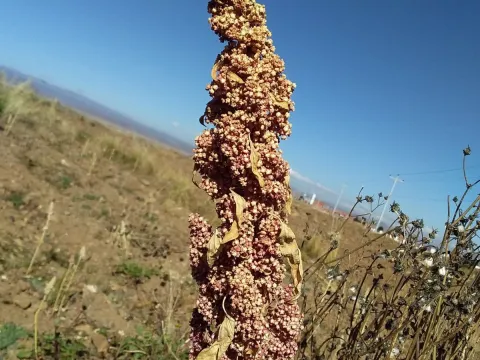
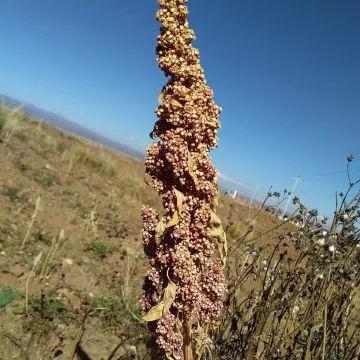
Botanically, the plant features a robust central stalk that can reach significant heights, topped with large panicles containing thousands of small, nutrient-dense seeds. The plant has a deep taproot system, which contributes to its renowned drought tolerance. The leaves are typically triangular or rhombic, and the entire plant can exhibit a wide range of colors during maturation, adding to its genetic diversity.
Regarding agronomic requirements, quinoa prefers well-drained, fertile soils with a neutral or slightly alkaline pH. It is highly regarded for its environmental resilience, showing remarkable tolerance to frost, drought, and soil salinity. Planting typically occurs in early spring once soil temperatures are stable, and success depends largely on efficient weed management during the initial growth stages.
- Nutritionally dense, gluten-free superfood.
- Remarkable tolerance to abiotic stresses (drought, salinity).
- Genetic diversity leading to site-specific varieties.
- Increasing global economic demand for sustainable crops.
Plant health is paramount, and producers must remain vigilant against pests such as the beet armyworm and various leaf miners. Fungal pathogens, including downy mildew and damping-off, represent the most common threats to yield, particularly in humid climates. Effective management involves rigorous crop rotation and the strategic use of integrated pest management to ensure high-quality production.
Photo gallery