Maple-leaved goosefoot
Chenopodium hybridum L.
Description
Maple-leaved goosefoot (Chenopodium hybridum L.) is an annual herbaceous plant belonging to the Amaranthaceae family. In agricultural settings, it is recognized as a significant weed species that competes with various crops for sunlight, water, and nutrients. Its taxonomic classification has historically evolved, reflecting its close relationship with other chenopod species common in arable land.
The species originated in Eurasia and is widely distributed across the temperate regions of the Northern Hemisphere. It thrives in nitrogen-rich, well-drained soils, frequently colonizing cultivated fields, disturbed ground, and field margins. Its ability to adapt to diverse soil types makes it a persistent challenge for farmers in various agro-climatic zones.
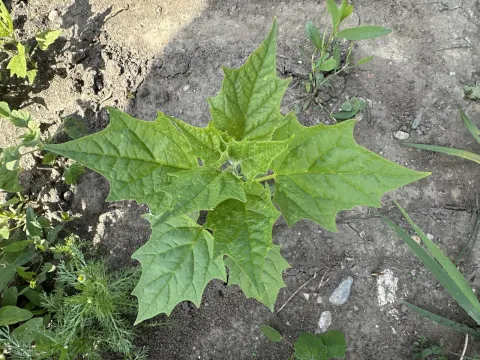
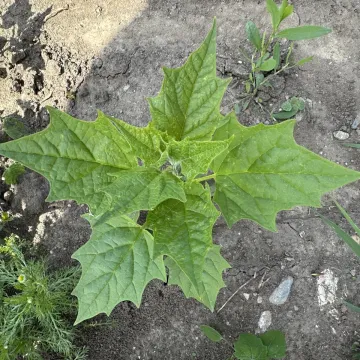
Morphologically, the plant is characterized by a branched, erect stem reaching heights of up to one meter. The leaves are distinctively shaped, resembling maple leaves with large, acute teeth, which differentiates it from other goosefoot species. The inflorescences consist of small, greenish flowers arranged in loose, terminal, or axillary panicles that produce numerous small, dark-colored seeds.
Agronomically, control measures focus on integrated weed management strategies. Effective practices include crop rotation to break the weed's life cycle, mechanical tillage to destroy seedlings, and the targeted application of herbicides. Because the seeds can remain viable in the soil for several years, a long-term strategy is required to exhaust the soil seed bank and prevent re-infestation of the fields.
While often viewed solely as a nuisance, the plant is subject to research regarding its potential interaction with crop pathogens, as it can act as an alternative host for viruses and insects affecting sugar beets and related crops. Understanding its biology is essential for minimizing crop yield losses. Efforts to suppress this weed also contribute to the overall health and stability of the agricultural ecosystem.
- High competitive ability in crop stands
- Persistent seed bank in agricultural soil
- Resistance to various environmental stresses
- Potential vector for agricultural pests
Photo gallery