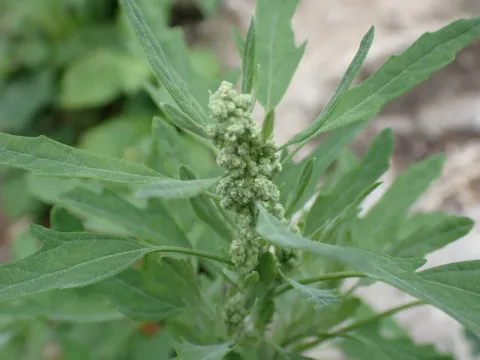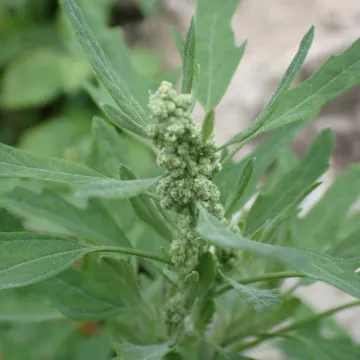

Fig-leaved goosefoot
Chenopodium ficifolium Sm.
Description
Fig-leaved goosefoot (Chenopodium ficifolium Sm.) is an annual herbaceous plant belonging to the Amaranthaceae family. In modern agricultural practice, it is recognized primarily as a widespread weed, although it occupies a specific niche in plant biology due to its high adaptability and rapid biomass accumulation in nutrient-rich soils.
Native to the Eurasian continent, this species has successfully naturalized in temperate and subtropical regions worldwide. It is commonly found in arable lands, particularly in areas with intensive cultivation systems. Its ability to colonize disturbed soils makes it a significant subject for weed science and ecological monitoring in agricultural landscapes.
Botanically, the plant is characterized by leaves that resemble those of a fig tree, featuring distinct lobes and a mealy texture on the undersides. It typically grows to a height of 30–100 cm, exhibiting an erect and branching growth habit. The flowers are small and clustered in terminal spikes, ensuring efficient pollination and high seed production throughout the late summer months.
The plant thrives in nitrogen-rich environments and prefers well-drained, fertile soil. Effective management requires a combination of mechanical weeding, such as inter-row cultivation, and strategic crop rotation to break the life cycle of the plant. Since its seeds are long-lived in the soil seed bank, consistent and integrated pest management (IPM) strategies are essential for control.
- Monitor fields for early germination signs.
- Utilize pre-emergent herbicide applications where applicable.
- Maintain balanced soil fertility to minimize weed vigor.
- Implement post-harvest tillage to destroy mature plants before seed shed.
Typical plant health issues involve common fungal pathogens such as downy mildew, especially in high humidity. Insect pests include various aphids and leaf miners, which may use the plant as a secondary host. While generally viewed as a threat to yield, the plant's growth dynamics provide valuable insights into nutrient cycling within agricultural ecosystems.
Photo gallery