Nettle-leaved goosefoot
Chenopodium murale L.
Description
Nettle-leaved goosefoot (Chenopodium murale L.) is an annual herbaceous plant belonging to the Amaranthaceae family. Although often classified as a weed in agricultural environments, it serves as a significant botanical subject for studying plant adaptation to disturbed and nutrient-rich soils in diverse agroecosystems worldwide.
Originating from the Mediterranean region, the plant has successfully naturalized across temperate and subtropical zones globally. Its distribution is closely linked to human activity, as it thrives in nitrogen-rich environments such as vegetable fields, vineyards, and near residential areas where soil fertility is elevated.
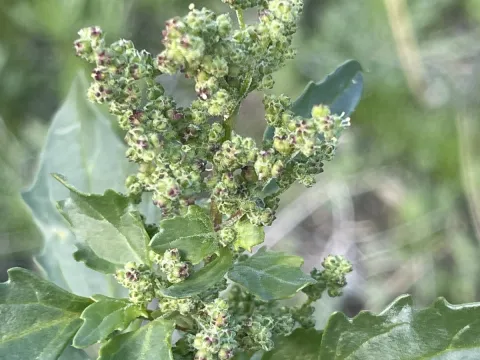
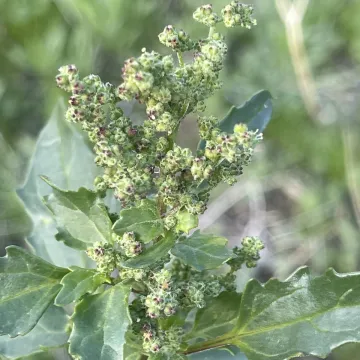
The botanical structure of Chenopodium murale is characterized by an erect, often branched stem that can reach heights of 20 to 80 cm. Its leaves are distinctively rhombic-ovate with coarsely serrated margins and often feature a mealy, granular texture. The small, green flowers are arranged in dense cymes, contributing to the plant's high reproductive capacity through numerous small seeds.
In terms of agricultural management, Nettle-leaved goosefoot thrives in full sun and well-drained, fertile soils. Effective agronomic control measures include timely mechanical weeding, deep tillage to bury seeds beyond the germination zone, and the strategic use of crop rotation to break the life cycle of the plant. Maintaining clean field margins also prevents re-infestation.
While primarily considered an agricultural pest, the plant has historical uses in traditional herbalism and as a leafy green vegetable in some regions after careful preparation to neutralize oxalates. The plant is susceptible to common pests like aphids and leaf miners, and it can act as a host for various fungal diseases, such as powdery mildew, which necessitates careful monitoring in proximity to high-value commercial crops.
Photo gallery