Canihua
Chenopodium pallidicaule Aellen
Description
Canihua (Latin: Chenopodium pallidicaule) is a grain crop belonging to the Amaranthaceae family. It is a hardy pseudocereal native to the high-altitude regions of the Andes, specifically in Peru and Bolivia. Often referred to as a "lost crop of the Incas," it is highly valued for its ability to thrive in harsh environments where other crops fail to reach maturity.
The plant's natural range is the Altiplano plateau, situated at altitudes ranging from 3,500 to 4,500 meters. Due to its evolutionary adaptation to this extreme climate, Canihua exhibits exceptional cold tolerance, capable of surviving frost throughout all stages of its life cycle. It is a vital crop for food security in mountainous zones with short growing seasons and unpredictable weather patterns.
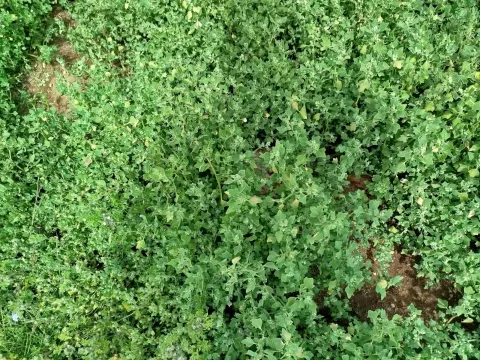
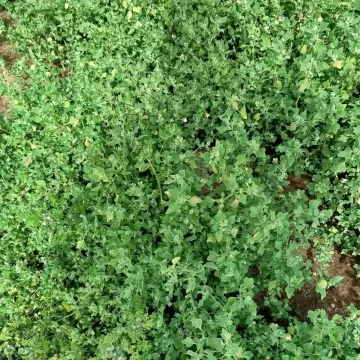
Botanically, Canihua is an annual herbaceous plant that grows in a branched, bushy form, typically reaching heights between 20 and 80 centimeters. The leaves are generally small and alternate, while the inflorescences form dense, cluster-like structures containing numerous tiny seeds. The seeds are notably smaller than those of quinoa and possess a diverse color palette, ranging from pale cream to dark chocolate brown.
Regarding agronomic requirements, Canihua prefers well-drained, loose soils but is surprisingly tolerant of poor, nutrient-deficient land. It requires a relatively low amount of water compared to common cereals, making it an excellent candidate for semi-arid agriculture. Sowing usually occurs at the beginning of the rainy season to ensure uniform germination, and the crop demonstrates high resistance to both drought and intense solar radiation.
Economically, Canihua is utilized primarily as a food source, processed into flour for beverages, porridge, or baked goods. Its nutritional profile is impressive, containing high levels of essential amino acids, iron, and fiber, and it is naturally free of the saponins that coat other related seeds, simplifying processing. Potential threats include specific leaf-eating caterpillars and fungal infections during periods of high humidity, though the plant's robust nature generally keeps infestation levels manageable without intensive chemical input.
Photo gallery