Clover dodder
Cuscuta epithymum (L.) L.
Description
Clover dodder (Cuscuta epithymum) is a highly specialized parasitic plant belonging to the Convolvulaceae family. Unlike conventional agricultural crops, it completely lacks chlorophyll and a root system. It survives by establishing connections via haustoria with host plants, extracting essential nutrients and water directly from the vascular system of the host, which severely weakens the affected plant.
Originating in Europe and Asia, clover dodder has become naturalized in many regions across the globe. It is commonly found in meadows, pastures, and agricultural fields where it specifically targets leguminous plants such as clover and alfalfa. Its ability to spread rapidly across fields makes it a significant concern for farmers, as it can quickly infest large areas if not managed effectively.
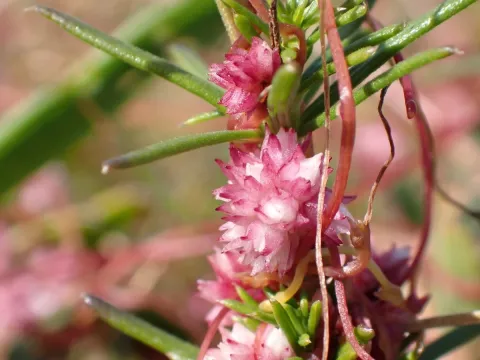
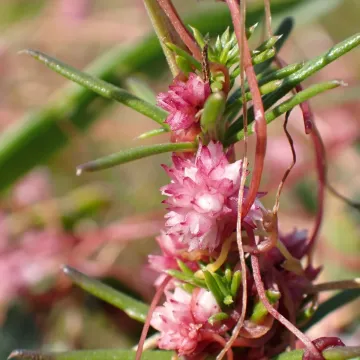
Botanically, the plant is characterized by thin, wire-like stems that can range from yellow to orange or reddish in color. The plant produces tiny white to pinkish flowers in clusters. One of its most dangerous features is its prolific seed production, with seeds capable of remaining dormant and viable in the soil for several years, which complicates eradication efforts.
Clover dodder thrives in temperate climates, requiring sufficient warmth and humidity to germinate. Successful agricultural management requires a combination of strict seed inspection protocols, crop rotation with non-host species, and mechanical removal of infested plants. In many regions, it is classified as a noxious weed, meaning strict legal requirements are in place to prevent its transport and spread.
There is no economic value to this plant; it is purely a destructive pest in agriculture. Infestations lead to massive yield losses, reduced nutritional quality of hay and forage, and increased costs for chemical and mechanical control. Furthermore, clover dodder is known to transmit various plant viruses, posing an additional risk to the overall health of the agricultural ecosystem.
- Obligate stem parasite without functional leaves.
- Rapid vegetative growth and widespread infestation.
- Extreme difficulty in separating seeds from crops.
- High efficiency in transmitting plant diseases.
Photo gallery