Small-flowered dodder
Cuscuta planiflora Ten.
Description
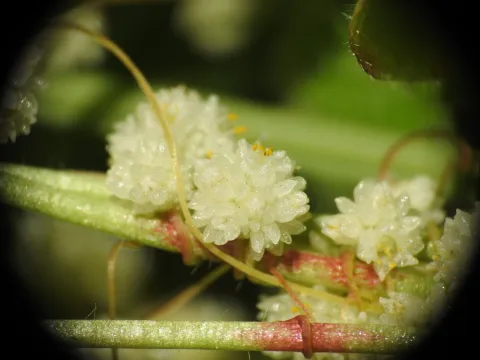
Small-flowered dodder (Cuscuta planiflora Ten.) is a parasitic plant species belonging to the Convolvulaceae family. Unlike typical crops, this plant lacks chlorophyll and true roots, existing solely as a stem parasite that relies entirely on host plants for water, minerals, and carbon compounds.
The origin of this species is tied to the Mediterranean and Central Asian regions, where it thrives in varied climates. It is currently recognized as a significant agricultural weed in many countries across the globe, frequently invading alfalfa fields, vegetable crops, and ornamental nurseries, causing significant economic losses.
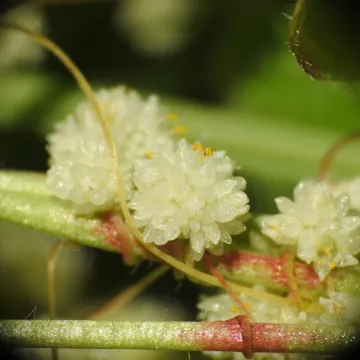
Botanically, the plant consists of thin, thread-like stems that entwine the host. It forms small, dense clusters of flowers, which distinguish it from other dodder species. The plant secures itself to the host through haustoria, specialized appendages that penetrate the vascular tissue of the victim to extract nutrients directly from the host's phloem and xylem.
Regarding cultivation requirements, Cuscuta planiflora is highly adapted to disturbed soils and open habitats with full sun exposure. It is not an intentionally cultivated crop; rather, it is a managed nuisance. Its seeds are highly persistent in the soil, and its germination is often synchronized with the germination of the host plants, making it a difficult weed to eradicate.
The primary management strategy is prevention, focusing on the use of certified, seed-free agricultural inputs and strict quarantine regulations. In agricultural landscapes, management often involves:
- Mechanical removal of infected plant patches.
- Application of systemic herbicides.
- Strict crop rotation schedules.
- Rigorous monitoring and surveillance.
Photo gallery