Erica manipuliflora
Erica manipuliflora Salisb.
Description
Erica manipuliflora (Erica manipuliflora Salisb.) is an evergreen perennial shrub belonging to the Ericaceae family. Unlike many other heath species, this variety is highly esteemed for its remarkable drought tolerance and late-season flowering, making it a staple in Mediterranean-style landscaping and apiculture.
The plant originates from the Mediterranean basin, with its native range stretching across the Balkan Peninsula, Turkey, and various Aegean islands. It thrives in rugged, sunny, and limestone-rich environments, demonstrating an exceptional ability to withstand rocky soils and exposure to strong winds and high solar radiation.
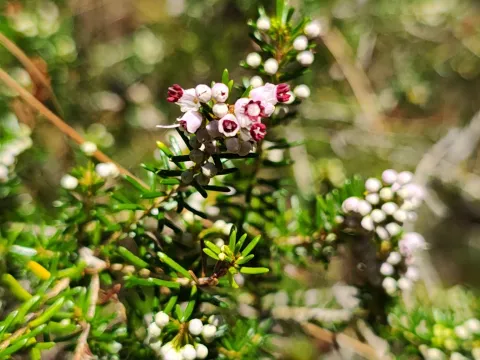
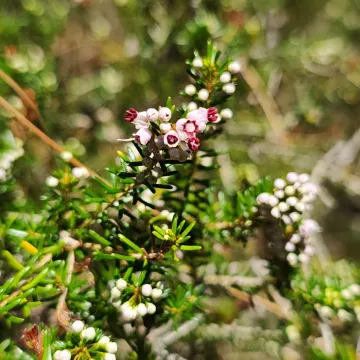
Botanically, this shrub grows to a height of 30–80 cm. It features small, needle-like leaves arranged in whorls along the stem. The plant produces delicate, bell-shaped flowers gathered in dense, umbel-like clusters (manipulae), which can range in color from soft pink to white. These flowers release a pleasant fragrance and attract various pollinators.
Key cultivation requirements include:
- Soil: Well-drained, slightly acidic to neutral, sandy or rocky substrates are preferred.
- Sunlight: This species requires full sun exposure to flourish and maintain its compact form.
- Watering: Moderate during the establishment phase, though mature plants are drought-resistant.
- Pruning: Light pruning immediately following the flowering period encourages bushier growth for the following season.
Economically, Erica manipuliflora is widely utilized in sustainable landscaping, particularly for xeriscaping, where water conservation is a priority. Beyond its aesthetic value, it serves as a critical late-season nectar source for bees, filling a vital gap in the forage calendar. Furthermore, the species exhibits excellent resilience against common pests and fungal pathogens, requiring minimal intervention compared to more sensitive horticultural varieties.
Photo gallery