Black-anthered heath
Erica melanthera L.
Description
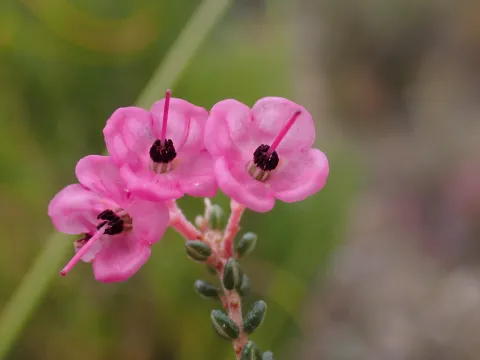
Erica melanthera L., commonly known as black-anthered heath, is a perennial flowering shrub belonging to the Ericaceae family. This species is highly regarded for its dense clusters of small, bell-shaped pink-to-purple flowers that provide significant ornamental value during its peak blooming season.
Native to the regions of South Africa, this plant has adapted to nutrient-poor and acidic soils. In an agricultural and horticultural context, it is cultivated for its resilience in specific ecological niches, primarily serving as a key plant in heath gardens and conservatory collections.
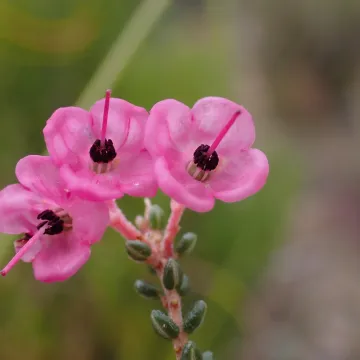
Botanically, the species is defined by its compact habit, reaching approximately 1 meter in height. Its foliage consists of small, needle-like leaves arranged in whorls along the stems. The distinct black anthers protruding from the flowers are the primary diagnostic feature for which the species is named.
Cultivation requires specific environmental conditions, primarily an acidic substrate (pH 4.5–5.5) with excellent drainage to prevent root rot. Erica melanthera thrives in temperate climates with high light intensity but requires protection from severe frost, making it ideal for container gardening in cooler regions.
Management of this culture involves regular pruning after flowering to maintain shape and encourage new growth. The plant is susceptible to several pathogens:
- Root rot caused by Phytophthora species due to overwatering.
- Spider mites in low-humidity environments.
- Leaf spot fungi that thrive in poor air circulation.
Photo gallery