Erica subdivaricata
Erica subdivaricata
Description
Erica subdivaricata is a perennial evergreen shrub belonging to the Ericaceae family. Known for its compact habit and prolific flowering, it is a highly valued ornamental species often found in specialized collections of heather plants due to its unique appearance and distinct growth pattern.
The plant originates from the diverse flora of South Africa. In its native habitat, it thrives in well-drained, acidic soils characteristic of the region's mountainous landscapes. When introduced to cultivation, it requires specific microclimatic conditions, often necessitating greenhouse protection or controlled environmental settings in colder latitudes to survive the winter months.
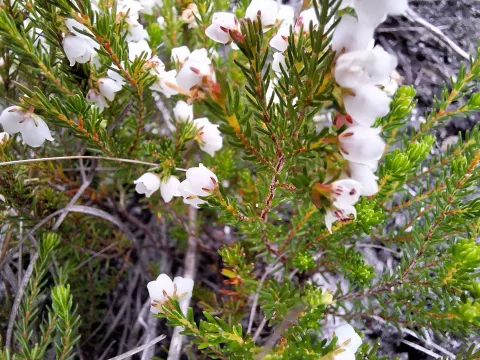
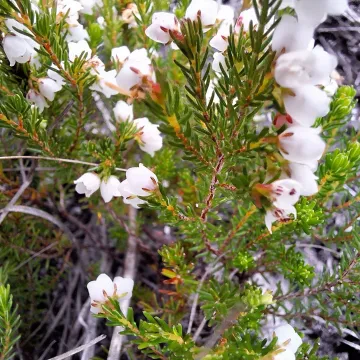
Botanically, the plant is defined by its small, needle-like foliage and stiff, spreading stems. The flowers are typically bell-shaped and clustered, appearing along the branches. Like many members of the Erica genus, it relies on a delicate symbiotic relationship with mycorrhizal fungi in the roots, which is essential for nutrient uptake and overall plant vitality.
Agronomic requirements for this species are centered on soil chemistry and moisture control. It requires a highly acidic substrate (pH 4.5–5.5) that must be light, airy, and free-draining to prevent root rot. Maintenance involves regular pruning after the flowering season to encourage density and proper fertilization with acid-forming agents that do not contain calcium or excess minerals.
The primary use of Erica subdivaricata is in ornamental horticulture, specifically in rock gardens or as a specimen plant in container gardening. Common pests include spider mites, which thrive in low humidity, while diseases are typically related to poor drainage, manifesting as root rot or fungal infections if the growing medium becomes compacted or waterlogged.
Photo gallery