Tangier iris
Iris tingitana Boiss. & Reut.
Description
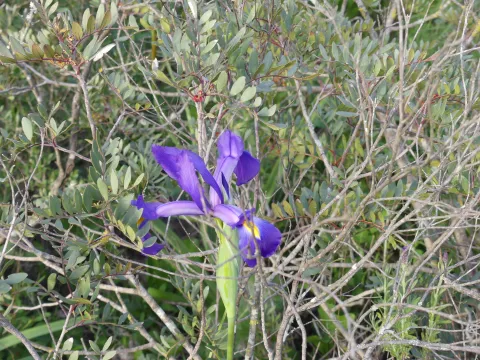
The Tangier iris (Iris tingitana) is a perennial bulbous plant belonging to the Iridaceae family. It is recognized for its early blooming period and distinctively elegant, large flowers that exhibit the characteristic structure of the Xiphium subgenus.
The species originates from North Africa, particularly Morocco. In its native habitat, it thrives in regions with warm, dry summers and mild, moist winters. These environmental conditions define the cultural requirements for successful cultivation in garden settings or greenhouses.
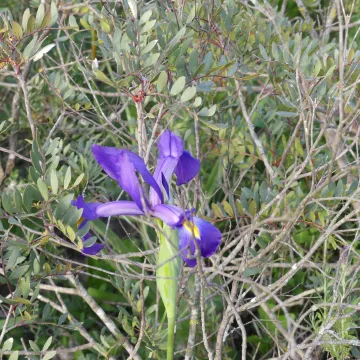
Botanically, the plant develops linear, channeled leaves and sturdy flowering stems. The blossoms are striking, typically featuring shades of blue or violet with a conspicuous yellow signal on the falls. The structure of the bulb is essential for the plant's survival during the dormant season.
Agricultural requirements include well-drained, fertile soil with a neutral or slightly alkaline pH. Proper site selection is vital, as the plant demands maximum sun exposure. Growers must ensure a strict watering cycle: adequate moisture is required during growth, followed by a dry period to prevent bulb rot during dormancy.
The Tangier iris is primarily used for ornamental landscaping and commercial cut-flower production. Growers must monitor for common diseases such as leaf spot (Heterosporium) and bacterial soft rot. Pest management focuses on controlling iris bulb flies and thrips, which can significantly affect plant health and flower quality.
Photo gallery