
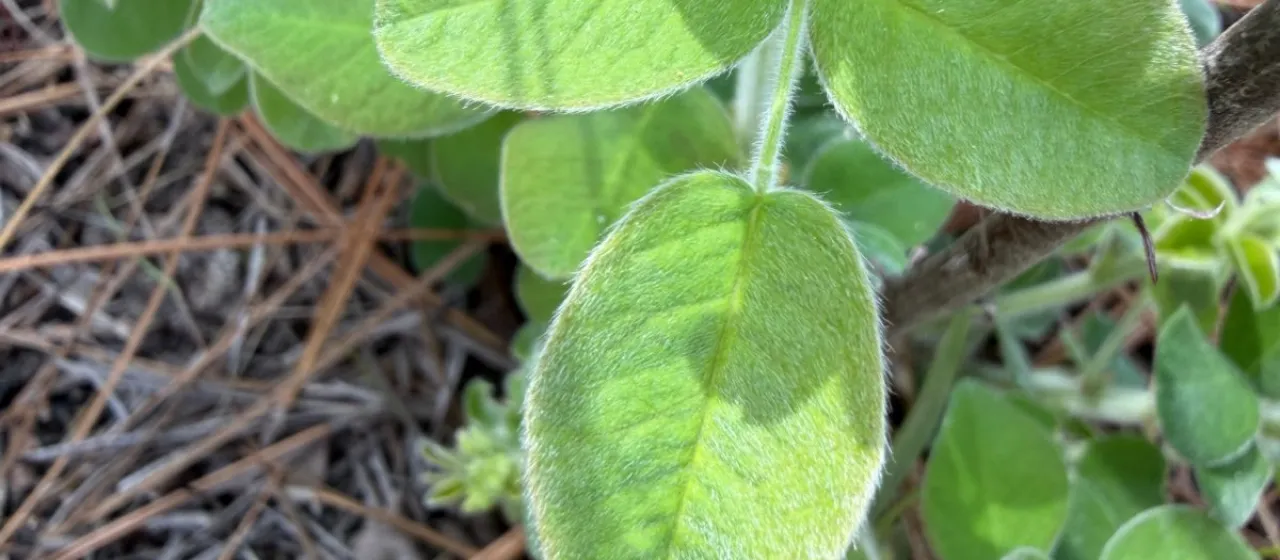
Description
Hairy bushclover (Lespedeza hirta) is a perennial legume belonging to the Fabaceae family. It is recognized for its significant role in ecological restoration and its potential as a forage crop in regions where standard leguminous species struggle to establish due to soil nutrient limitations or periodic droughts.
Native to North America, the plant is naturally distributed across the eastern and central regions of the continent. It typically thrives in open woodlands, prairies, and dry, sandy landscapes. Its distribution pattern reflects its preference for well-drained habitats and tolerance for acidic to neutral soil pH levels, making it a robust pioneer species.
Botanically, Lespedeza hirta is defined by its erect stems covered with stiff, spreading hairs. The foliage consists of trifoliate leaves, and it produces clusters of small, pea-like flowers. The plant's deep taproot system is essential for its survival, allowing it to remain productive during periods of water scarcity and enhancing its durability compared to shallower-rooted forage options.
The cultivation requirements are centered around site selection: sandy or gravelly soils with excellent drainage are optimal. It does not tolerate waterlogging, which significantly increases susceptibility to root diseases. In terms of agronomy, seeding should occur during the spring months, ensuring proper soil moisture for germination, followed by minimal disturbance as the plant is hardy once established.
Its primary agricultural uses include forage production, although it is often used in mixtures to provide roughage, and soil improvement, as it aids in nitrogen fixation and prevents topsoil loss. Pests such as aphids and leaf-eating beetles may occasionally affect yield, and fungal pathogens like powdery mildew can appear in poorly ventilated or excessively humid conditions, necessitating proper field management.