Erica australis
Erica australis L.
Description
Erica australis, commonly known as the Spanish heath, is a perennial evergreen shrub belonging to the Ericaceae family. This woody plant is highly valued for its striking, bell-shaped flowers and dense, needle-like foliage that provides aesthetic appeal throughout the year. It represents one of the more robust species within the Erica genus, reaching significant heights in appropriate habitats.
The plant originates from the southwestern part of Europe, specifically the Iberian Peninsula, as well as northwestern Africa. It typically inhabits rocky terrain, open scrublands, and heaths where the soil is naturally acidic. Due to its Mediterranean origins, Erica australis thrives in climates that are temperate and lack severe, prolonged frost, which is a critical factor for successful cultivation.
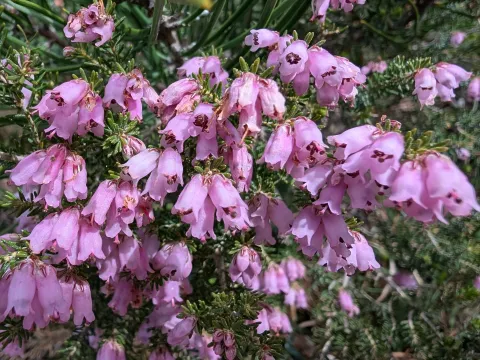
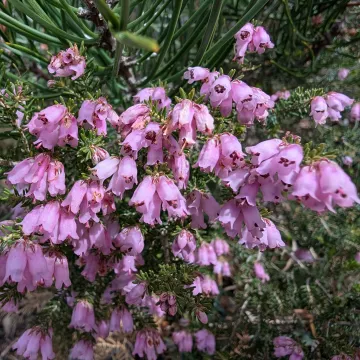
Botanically, Erica australis is distinguished by its whorled leaves and bright purple-pink flowers that bloom in clusters at the tips of the branches. The blooming period generally occurs from early spring to mid-summer. The plant's structure allows it to develop a woody base over time, making it a permanent and durable feature in any landscape design.
Effective agrotechnical practices for this species focus primarily on soil chemistry and drainage. The plant strictly requires acidic soil (pH 4.5–5.5) to survive and grow. Sandy or peaty soil mixtures are optimal for maintaining the necessary root aeration. Furthermore, while it enjoys sunlight, it also requires consistent moisture, though it will not tolerate waterlogged, heavy soils.
- Sunlight: Full sun to partial shade.
- Watering: Consistent but well-drained.
- Soil pH: Strongly acidic is required.
- Pruning: Light trimming after flowering to maintain shape.
The primary horticultural use for Erica australis is in ornamental landscaping. It is an excellent choice for rock gardens, mass plantings on hillsides, or as an accent plant in shrub borders. Besides its visual impact, it acts as a functional ground cover that suppresses weeds and provides a habitat for various pollinators, particularly bees, during the early season.
Common plant health issues include fungal diseases such as root rot and grey mold, which are typically caused by poor drainage or high humidity around the canopy. Pests such as spider mites and scale insects can also affect the plant during dry spells. Management practices should prioritize preventative measures, such as proper spacing for air circulation and avoiding overhead irrigation.
Photo gallery