


SKU #315
·
2 101 views
Clinic Duo
Herbicides, Desiccants
NufarmUser rating
0 votes0% positive reviews
No ratings yet — be the first.
Last Processing Date, Days
1
By type of action
Systemic herbicide
By Mode of Action
Non-selective herbicide
By Application Timing
Post-emergence herbicide
About product

A high-performance systemic herbicide and desiccant designed for the complete eradication of stubborn perennial weeds.
Last Processing Date, Days
1
By type of action
Systemic herbicide
By Mode of Action
Non-selective herbicide
By Application Timing
Post-emergence herbicide
Description
Clinical Duo: Precision Control for Complex Weeds
In modern agricultural practice, managing persistent perennial weeds like field bindweed, creeping thistle, and couch grass requires a systemic solution that delivers consistent performance. Clinical Duo, manufactured by Nufarm and its partners, distinguishes itself through the high efficiency of its isopropylamine salt formulation. Unlike generic glyphosate herbicides, this product is designed for high-stress agricultural environments, ensuring rapid translocation throughout the target plant.
Key Advantages and Field Performance
- Dual Functionality: Operates as a systemic post-emergence herbicide and a reliable desiccant for crops like sunflowers, soybeans, and flax.
- Broad-Spectrum Efficacy: Effectively targets difficult broadleaf weeds and annual grasses, including lamb's-quarters and green foxtail.
- Operational Efficiency: With a re-entry and pre-seeding interval of just 1 day, it allows farmers to maintain tight production schedules without compromising field hygiene.
Clinical Duo is specifically formulated for growers looking for a robust solution for fallow fields or pre-sowing treatment. With an application rate exceeding 3.0 L/ha, it provides the necessary coverage to eradicate deep-rooted perennials that typically survive lower-potency treatments. It is an essential tool for farms cultivating forage beet, melons, or winter rapeseed, where field clearing must be absolute to ensure early crop establishment.
Best Practice Application
As a non-selective systemic herbicide, Clinical Duo must be applied with precise nozzle calibration to avoid drift onto neighboring crops. Given its systemic nature, the effectiveness is maximized when weeds are actively growing and soil moisture is adequate. When handled according to its 3rd-class hazard classification, it serves as a cornerstone for integrated weed management programs aimed at reducing dependency on intensive mechanical tillage.
Composition
Active ingredients
- Glyphosate гербицид
- Glyphosate isopropylamine salt гербицид Глифосат
Application
Used on crops
Specifications hover over for a hint about the specification
|
Last Processing Date, Days
Last Processing Date, Days
Number of days from processing to harvest cleanup |
1 |
|---|---|
|
By type of action
By type of action
Depending on their ability to move through living tissues, herbicides are divided into contact and systemic. Contact herbicides cause local damage to plant tissue upon contact, which dies or gradually degrades. This action does not always completely destroy the plant; often, its... |
|
|
By Mode of Action
By Mode of Action
Herbicides are divided into two groups according to their mode of action: Non-selective herbicides — intended for the destruction of all plant species. They are applied in agricultural fields during the absence of the main crop (after harvest, before crop emergence, on fallow lan... |
|
|
By Application Timing
By Application Timing
Herbicides are classified according to application timing into pre-emergent and post-emergent herbicides. Pre-emergent herbicides are mostly soil-applied or granular formulations applied before the emergence of crop plants. They are applied either pre-sowing (during pre-sowing cu... |
|
|
By application method
By application method
Based on the method of application, herbicides are divided into foliar, soil, and root herbicides. Foliar herbicides are applied to vegetative plants and act through their above-ground organs. The main method of application for such preparations is spraying using sprayers or airp... |
|
| Form of the preparation | |
|
Drug Consumption
Drug Consumption
Mass of the preparation per unit of treated area. It is customary to express the dosage rate in kilograms per hectare. The dosage rate is most often given in terms of 100% active ingredient, although sometimes it is calculated based on the preparation in the form of application w... |
More than 3.0 L/ha |
|
Desiccant
Desiccant
Desiccants (from Latin desicco — dry; desiccans (desiccantis) — drying) are chemical substances used in agriculture for desiccating plants at the root. They can be conditionally classified as herbicides, as they irreversibly affect plants by causing tissue dehydration, ultimately... |
|
| Danger Class | 3 |
| Catalog | Catalog → Herbicides, Desiccants |
| Manufacturer | Nufarm |
| Manufacturer | Jiangsu Good Harvest-Weien Agrochemical Co., Ltd, Китай. |
| Applicant | ф. «Нуфарм ГмбХ енд Ко КГ», Австрія |
| Country | Austria |
Store offers · 4 from 4 stores
Prices are updated on loadLoading offers…
Aggregator catalog: prices are collected automatically from store websites, normalized by AI and converted at the current exchange rate. Before ordering, confirm the price and availability on the store's website. This block is not indexed by search engines — the data is loaded after the page opens.
Alternatives
Fodder beet · similar varieties




Pilaround
Піларквім (Шанхай) Ко., Лтд. (Pilarquim (Shanghai) Co, LTD), Шанхай, Китай
02.2K 3 offers
8.1 €за 1 л ≈ 414 ₴

See also
Often considered together with this variety


Recently viewed
Similar items in this catalog section


Stomp 330
БАСФ Агро БВ, Швейцарія, на заводі , Франція,Італія (Сієна)
From your browsing history
710.8K 14 offers
13.2 €за 1 л ≈ 674 ₴


Lazurit
ЗАТ Фірма Август, Росія.,селище Вурнари,
From your browsing history
39.1K 11 offers
6.4 €за 1 л ≈ 327 ₴


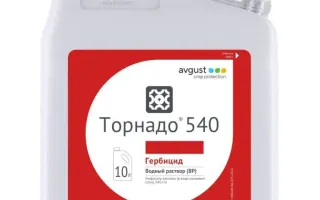
Tornado
ЗАТ Фірма Август, Росія.,селище Вурнари,
From your browsing history
57.8K 8 offers
0.8 €за 1 л ≈ 41 ₴

Comments · 0