Sangli
Herbicides, Desiccants
F. Mitsuishi Chemicals Agro Inc., JapanUser rating
7 votesAbout product
Japanese systemic herbicide for total control of perennial weeds and crop desiccation.
Description
Advanced weed control with Japanese precision
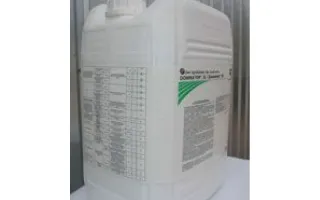
"Sangli" from F. Mitsui Chemicals Agro Inc. is a systemic, non-selective herbicide designed for heavy-duty field cleaning. By utilizing the power of glyphosate (isopropylamine salt), it ensures total translocation from the foliage directly to the root system, which is essential for eradicating persistent weeds like field bindweed, couch grass, and Canadian thistle.
Primary field applications
Farmers utilize Sangli as a multipurpose tool for two critical agricultural operations:
- Pre-sowing and post-harvest management: Highly effective for clearing fields intended for oats, barley, sunflowers, flax, or fodder beets. It eliminates cereal regrowth and annual dicot weeds, providing a clean start for the next crop cycle.
- Desiccation: Accelerates the drying process of vegetative mass, ensuring uniform ripening and minimizing harvest losses.
Application best practices
As a foliar-applied post-emergence herbicide, Sangli requires accurate application to maximize absorption. With a required application rate of over 3.0 L/ha, it provides enough active ingredient to suppress even deep-rooted perennial weeds. Because it is a non-selective herbicide, it acts on all green plant matter, making it perfect for total vegetation control where crop safety is not an issue or during specific pre-harvest desiccation windows.
Agronomic efficiency
Operating under a Hazard Class 4 designation, Sangli offers a balance of potency and usability. With a short pre-harvest interval of just one day, it offers significant flexibility for harvest planning. Whether you are dealing with common lambsquarters or invasive perennial grasses, the Japanese formulation ensures high performance in field conditions, effectively reducing competition for moisture and soil nutrients at the most critical growth stages.
Composition
Active ingredients
- Glyphosate гербицид
- Glyphosate isopropylamine salt гербицид Глифосат
Application
Used on crops
Specifications hover over for a hint about the specification
|
Last Processing Date, Days
Number of days from processing to harvest cleanup |
1 |
|---|---|
|
By type of action
By type of action
Depending on their ability to move through living tissues, herbicides are divided into contact and systemic. Contact herbicides cause local damage to plant tissue upon contact, which dies or gradually degrades. This action does not always completely destroy the plant; often, its... |
|
|
By application method
Based on the method of application, herbicides are divided into foliar, soil, and root herbicides. Foliar herbicides are applied to vegetative plants and act through their above-ground organs. The main method of application for such preparations is spraying using sprayers or airp... |
|
|
By Mode of Action
By Mode of Action
Herbicides are divided into two groups according to their mode of action: Non-selective herbicides — intended for the destruction of all plant species. They are applied in agricultural fields during the absence of the main crop (after harvest, before crop emergence, on fallow lan... |
|
|
By Application Timing
Herbicides are classified according to application timing into pre-emergent and post-emergent herbicides. Pre-emergent herbicides are mostly soil-applied or granular formulations applied before the emergence of crop plants. They are applied either pre-sowing (during pre-sowing cu... |
|
| Form of the preparation | |
|
Drug Consumption
Drug Consumption
Mass of the preparation per unit of treated area. It is customary to express the dosage rate in kilograms per hectare. The dosage rate is most often given in terms of 100% active ingredient, although sometimes it is calculated based on the preparation in the form of application w... |
More than 3.0 L/ha |
| Danger Class | 4 |
|
Desiccant
Desiccant
Desiccants (from Latin desicco — dry; desiccans (desiccantis) — drying) are chemical substances used in agriculture for desiccating plants at the root. They can be conditionally classified as herbicides, as they irreversibly affect plants by causing tissue dehydration, ultimately... |
|
| Catalog | Catalog → Herbicides, Desiccants |
| Manufacturer | F. Mitsuishi Chemicals Agro Inc., Japan |
| Applicant | F. Mitsuishi Chemicals Agro Inc., Japan |
| Country | Japan |
Store offers · 1 from 1 stores
Prices are updated on loadAggregator catalog: prices are collected automatically from store websites, normalized by AI and converted at the current exchange rate. Before ordering, confirm the price and availability on the store's website. This block is not indexed by search engines — the data is loaded after the page opens.
Alternatives
Common oat · similar varieties
See also
Often considered together with this variety
Recently viewed
Similar items in this catalog section


Comments · 7