


SKU #36950
·
35 views
Lira Odeska
Wheat
User rating
0 votes0% positive reviews
No ratings yet — be the first.
Type of Development
Winter wheat
Seed: mass 1.000 pcs seeds
40-45 grams
Resistance to lodging
Good
Potential Yield
7-8 tons, 8-9 tons, 9-10 tons
About product

Winter wheat Lira Odeska is a high-yielding medium-maturing variety suitable for cultivation in various regions of Ukraine, including Polissia, Forest-Steppe, and Steppe. This variety features a strong white ear, 9–10 cm long, with tightly packed kernels — 64 to 72 per ear, and large, red, egg-shaped kernels weighing up to 44 g. Average yield ranges from 7.8 to 11.8 t/ha, equivalent to approximate…
Type of Development
Winter wheat
Seed: mass 1.000 pcs seeds
40-45 grams
Resistance to lodging
Good
Potential Yield
7-8 tons, 8-9 tons, 9-10 tons
Description
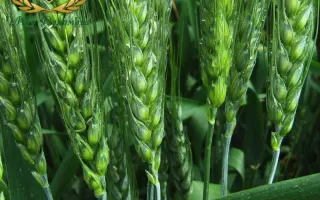
Winter wheat Lira Odeska is a high-yielding medium-maturing variety suitable for cultivation in various regions of Ukraine, including Polissia, Forest-Steppe, and Steppe. This variety features a strong white ear, 9–10 cm long, with tightly packed kernels — 64 to 72 per ear, and large, red, egg-shaped kernels weighing up to 44 g. Average yield ranges from 7.8 to 11.8 t/ha, equivalent to approximately 77.5 c/ha, with protein content in the grain exceeding 14%, ensuring high-quality flour with strength of 390–418 a.e.
Lira Odeska belongs to the intensive type of wheat for universal use and is characterized by good winter hardiness, high drought and heat resistance, as well as excellent resistance to lodging and shattering. The stem is short, thick, and sturdy, further enhancing resistance to lodging. Leaves are green and hairless, while the spikelet lemma has a lanceolate-elongated shape with well-defined venation. The variety demonstrates high resistance to major diseases, including brown and stem rust, as well as powdery mildew, confirmed by resistance ratings in points.
Due to its biological characteristics and adaptability, Lira Odeska is suitable for intensive cultivation technologies and can be successfully grown even on less favorable soils and under deviations from optimal sowing conditions. The variety exhibits good tillering, promoting robust yields, and is recommended for cultivation in various agroclimates, ensuring stable productivity and high-quality grain.
Lira Odeska belongs to the intensive type of wheat for universal use and is characterized by good winter hardiness, high drought and heat resistance, as well as excellent resistance to lodging and shattering. The stem is short, thick, and sturdy, further enhancing resistance to lodging. Leaves are green and hairless, while the spikelet lemma has a lanceolate-elongated shape with well-defined venation. The variety demonstrates high resistance to major diseases, including brown and stem rust, as well as powdery mildew, confirmed by resistance ratings in points.
Due to its biological characteristics and adaptability, Lira Odeska is suitable for intensive cultivation technologies and can be successfully grown even on less favorable soils and under deviations from optimal sowing conditions. The variety exhibits good tillering, promoting robust yields, and is recommended for cultivation in various agroclimates, ensuring stable productivity and high-quality grain.
Video · 3 videos
Suggest a video →Crop & resistance
Disease resistance
Specifications
| Type of Development | |
|---|---|
| Seed: mass 1.000 pcs seeds | 40-45 grams |
| Resistance to lodging | |
| Potential Yield | 7-8 tons, 8-9 tons, 9-10 tons |
| Catalog | Catalog → Wheat |
| Originator | PBGI-NCSCI |
| Country | Ukraine |
Store offers · 11 from 8 stores
Prices are updated on loadLoading offers…
Aggregator catalog: prices are collected automatically from store websites, normalized by AI and converted at the current exchange rate. Before ordering, confirm the price and availability on the store's website. This block is not indexed by search engines — the data is loaded after the page opens.
See also
Often considered together with this variety



Recently viewed
Similar items in this catalog section


Comments · 0