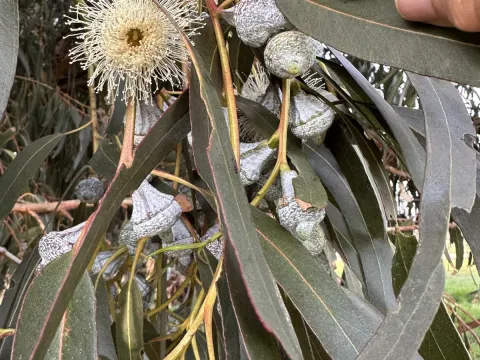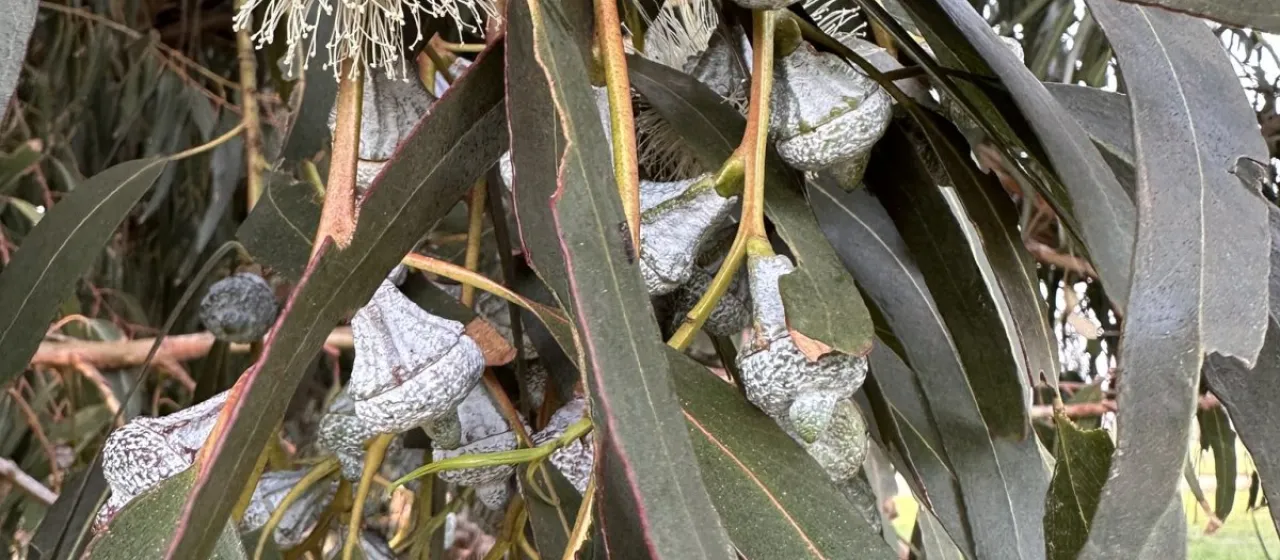
Description
The southern blue gum (Eucalyptus globulus subsp. pseudoglobulus) is a vigorous, fast-growing evergreen tree belonging to the Myrtaceae family. It is widely recognized in agriculture and forestry as one of the most productive species for timber and biomass production due to its exceptional growth rate and adaptability to various subtropical environments.
Originally native to southeastern Australia and Tasmania, this species has been extensively introduced to many parts of the world, including Europe, North Africa, and South America. It thrives in regions with Mediterranean climates where mild, wet winters and warm, dry summers provide the ideal conditions for its rapid development and canopy expansion.
Botanically, the species is defined by its distinctive sickle-shaped, leathery leaves and smooth, peeling bark that sheds in long ribbons. The foliage is rich in eucalyptol, a potent essential oil that acts as a natural deterrent against many insect pests, while the deep, aggressive root system allows the tree to efficiently extract water and nutrients from the soil profile.
Agricultural management requires careful site selection, prioritizing deep, well-drained soils and full sun exposure. While the tree is drought-tolerant once established, young saplings require consistent moisture to thrive. Proper silvicultural practices, including thinning and weed management, are essential to maximize stand density and timber quality in commercial plantations.
The economic value of this species is significant. It serves as a primary source for the pulp and paper industry, provides high-quality timber for construction, and is the key raw material for the extraction of eucalyptus oil used in pharmaceuticals and cosmetics. Additionally, its high transpiration rates make it an excellent choice for land reclamation and water-logged soil management.
- Rapid growth rates and high biomass output.
- Significant source of high-grade eucalyptus oil.
- Valuable raw material for the cellulose and paper industry.
- Excellent species for large-scale reforestation and land reclamation.
Photo gallery