Description
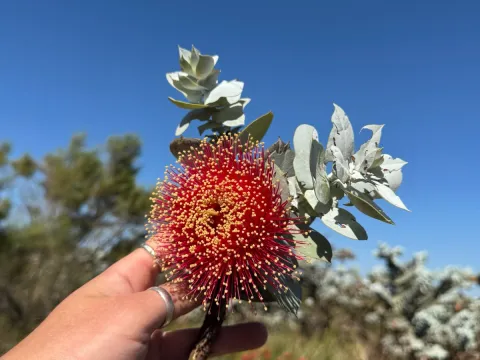
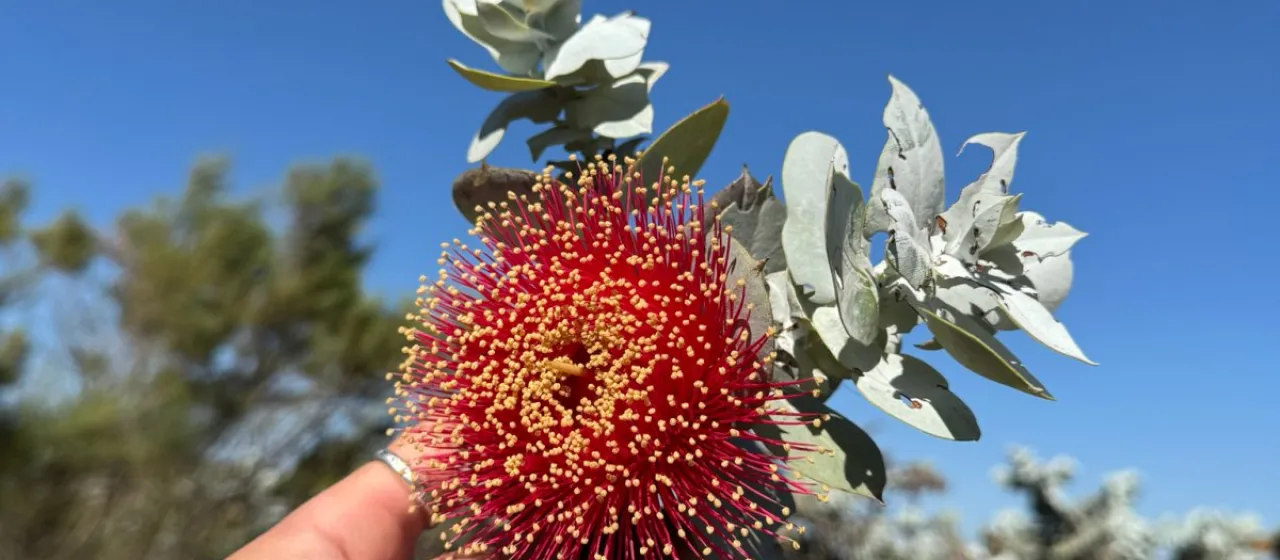
Eucalyptus macrocarpa, commonly referred to as the bluebush or Mottlecah, is a distinctive shrub belonging to the Myrtaceae family. It is recognized for its striking appearance, characterized by broad, silvery-grey foliage and some of the largest flowers found within the entire Eucalyptus genus.
The species is native to the semi-arid regions of southwestern Western Australia. It thrives in the mallee shrubland habitat, where it has evolved to survive in nutrient-poor, sandy soils and harsh environmental conditions, demonstrating remarkable resilience to prolonged drought and intense sunlight.
Botanically, this plant is defined by its lignotuberous habit, allowing it to regenerate after fire. The leaves are sessile, thick, and covered in a waxy bloom, which helps the plant retain moisture. The flowers, which can reach up to 10 cm in diameter, are usually a vivid crimson, providing a dramatic contrast against the foliage.
In terms of cultivation, success relies on mimicking its natural habitat. The plant demands excellent drainage and full sun exposure. Gardeners must avoid overwatering, as the roots are highly susceptible to Phytophthora and other root-rot pathogens common in waterlogged, poorly aerated soil conditions.
Commercially, Eucalyptus macrocarpa is highly valued in the nursery trade and for high-end floral arrangements. While it is rarely grown as a field crop for essential oils or timber, its ornamental value makes it a sought-after specimen for xeriscaping and conservatory displays in suitable climate zones.
- Requires well-drained, sandy soils.
- Needs full exposure to solar radiation.
- Extremely drought-tolerant once established.
- Vulnerable to fungal root diseases in humid environments.
Photo gallery