Description
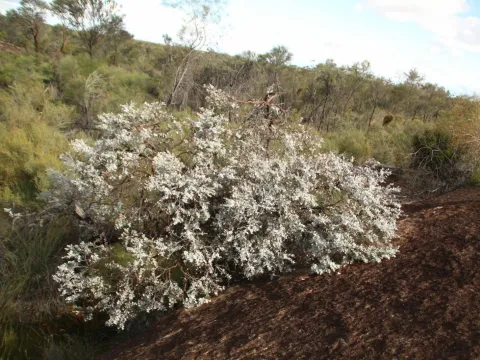
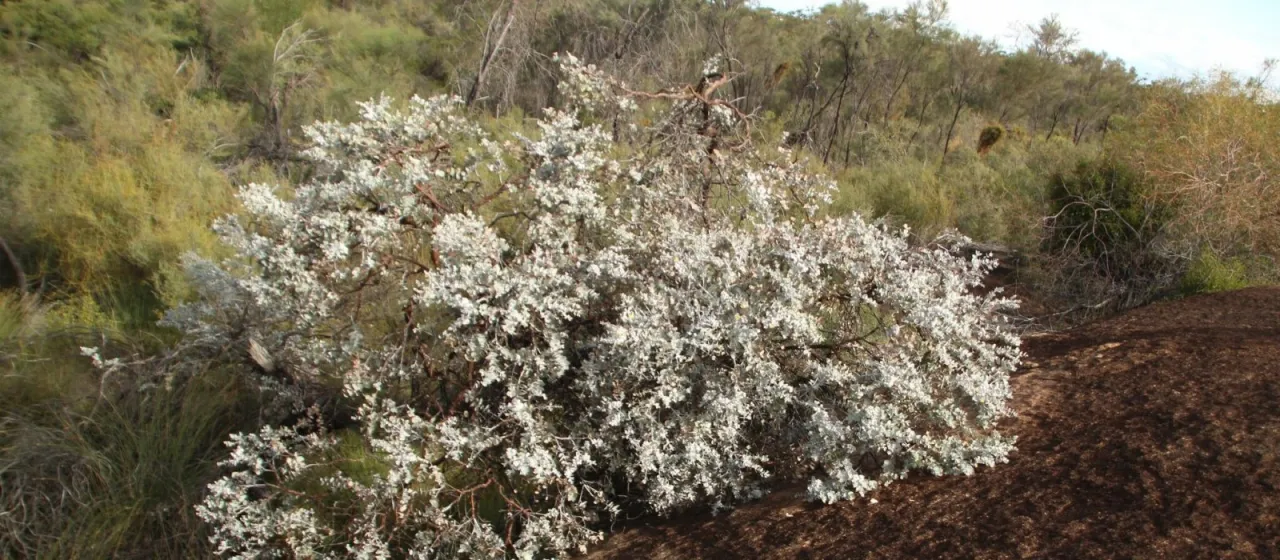
Eucalyptus crucis, commonly known as the Silver Mallee, is a distinct shrub or small tree belonging to the Myrtaceae family. It is highly regarded by gardeners and landscape architects for its stunning, silver-blue foliage and attractive, peeling bark, which provide year-round aesthetic appeal.
This species is endemic to Western Australia, where it is primarily found in granite-based rocky terrains. Its native habitat has shaped its evolutionary adaptations, making it an exceptionally drought-tolerant plant capable of thriving in nutrient-poor, rocky soil conditions where other species might fail.
The botanical profile of Eucalyptus crucis typically includes a bushy, multi-stemmed habit reaching heights of two to five meters. Its leaves are juvenile-like, rounded or heart-shaped, and coated with a thick, glaucous waxy layer. This wax is a natural defense mechanism that minimizes water loss and gives the tree its signature metallic appearance.
For successful cultivation, growers must prioritize excellent drainage. The plant thrives in sandy or stony soils with a neutral to slightly acidic pH. It requires a position in full sun to maintain its color and compact structure. Overwatering is the most common cause of failure; therefore, the substrate must be allowed to dry out completely between irrigation cycles.
Eucalyptus crucis is widely used in xeriscaping and Mediterranean-style gardens, acting as a striking architectural feature. Beyond landscaping, its foliage is highly prized in the floral industry for adding texture and color to bouquets. Maintenance primarily involves monitoring for root pathogens in damp conditions and managing pests like scale insects or mites in greenhouse settings.
Photo gallery