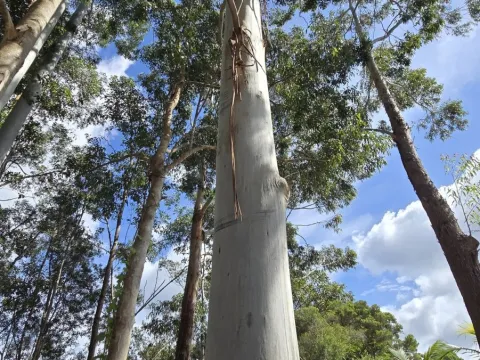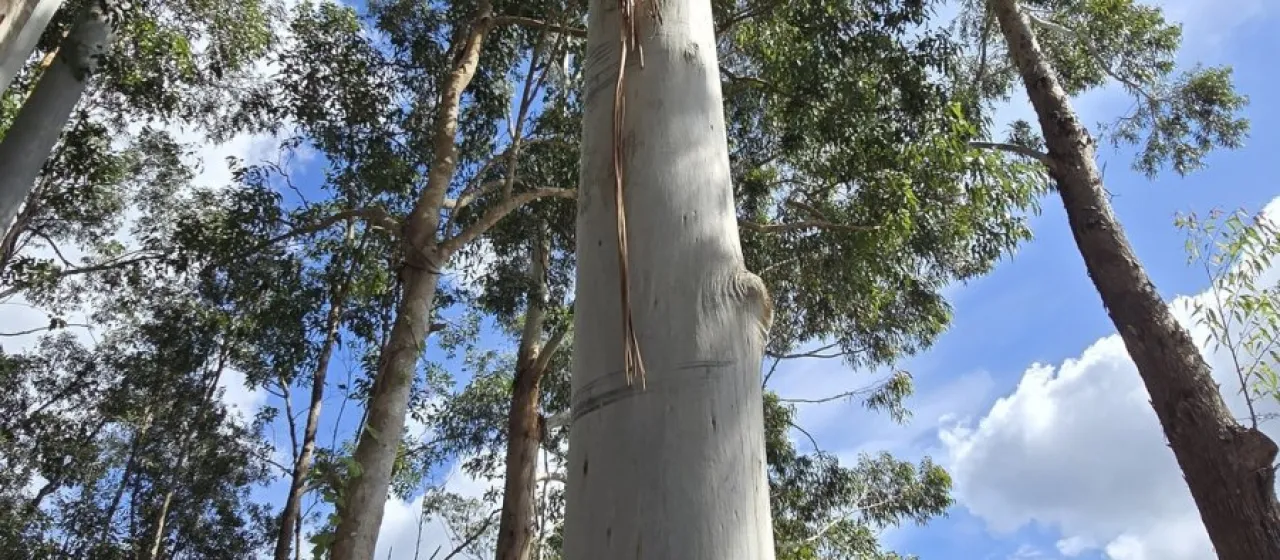
Description
This hybrid is the result of cross-breeding Eucalyptus grandis and Eucalyptus camaldulensis, members of the Myrtaceae family. It is widely recognized in forestry for its superior hybrid vigor, effectively merging the rapid growth rate of E. grandis with the high environmental resilience and drought tolerance inherent to E. camaldulensis.
The hybrid is extensively cultivated in tropical and subtropical regions across South America, Africa, and Southeast Asia. Its ability to thrive in diverse and often harsh environmental conditions makes it a cornerstone of commercial plantation forestry, particularly in areas where fast-turnover timber production is required.
Botanically, the plant features a straight, cylindrical bole and distinctively aromatic foliage. It develops a vigorous root system that allows it to optimize water uptake. The tree is known for its incredible growth speed, frequently reaching harvestable maturity for pulpwood within a decade, depending on site quality and management practices.
Silvicultural requirements involve deep site preparation to facilitate root penetration and the application of fertilizers to ensure adequate nutrient availability during the establishment phase. The hybrid performs best in deep, well-drained loamy soils but displays remarkable tolerance to various soil types, making it suitable for large-scale reforestation efforts.
Economic importance is centered on its versatility in industrial applications:
- Production of high-quality pulp for the paper and packaging industry.
- Manufacturing of solid wood products, including flooring and furniture.
- Bioenergy production utilizing harvest residues and woody biomass.
- Land reclamation and stabilization of eroded tropical soils.
Plantation management must address potential issues such as fungal leaf pathogens and specific eucalyptus-specialized insect pests. Regular monitoring and the implementation of integrated pest management (IPM) strategies are essential to maintain plantation productivity and wood quality throughout the rotation cycle.
Photo gallery