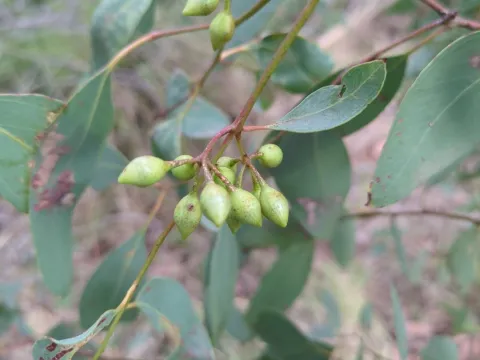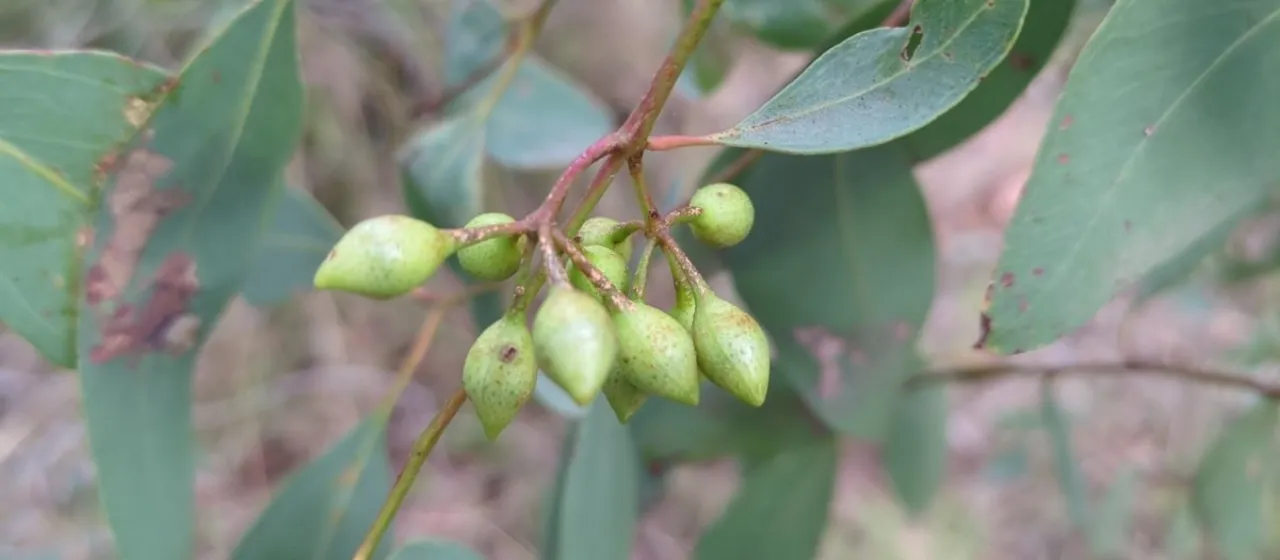
Description
The Yellow box (Eucalyptus melliodora) is a prominent evergreen tree belonging to the Myrtaceae family. Renowned for its fragrant, nectar-rich flowers, it is considered one of the most important honey-producing trees in its native range. The tree typically displays an elegant, spreading crown with thin, pendulous foliage.
The species is native to eastern Australia, where it thrives across a variety of landscapes including plains and tablelands. It prefers a temperate climate and is well-adapted to areas with varying rainfall patterns, though it is not frost-hardy in its juvenile stages and requires protection against severe freezing temperatures.
Botanically, Eucalyptus melliodora is easily identified by its unique bark. The lower trunk often features rough, box-like bark, while the branches and upper trunk are smooth and shed in long ribbons. The flowers are typically white to cream in color, appearing in clusters that serve as a crucial resource for local pollinators.
Successful cultivation requires deep, well-drained soils, preferably loams or alluvial soils. Agricultural practices include monitoring moisture levels during the establishment phase, as the tree is sensitive to waterlogged conditions. Once established, it demonstrates good tolerance to dry spells but benefits from consistent growing conditions.
The primary economic uses of the Yellow box are in beekeeping and timber production. The honey produced from these trees is highly sought after for its clarity and delicate flavor. Furthermore, the timber is exceptionally dense, durable, and termite-resistant, making it a preferred material for heavy construction and fence posts.
- Superior honey production
- High-density timber
- Requires well-drained soil
- Sensitive to heavy frosts
- Resistant to most decay agents
Regarding health management, the tree can be susceptible to various leaf-eating insects and defoliators. Pathological issues are generally restricted to fungal leaf spots occurring in high-humidity environments. Integrated pest management and proper spacing to ensure air circulation are the best methods to maintain tree health in commercial plantations.
Photo gallery