


SKU #815
·
1 263 views
Bimmer
Insecticides, Acaricides
Peters & Burg Kft.User rating
0 votes0% positive reviews
No ratings yet — be the first.
Last Processing Date, Days
40
Maximum number of treatments
2
Method of Application
Spraying by vegetation
Form of the preparation
Emulsion concentrate
About product

A powerful systemic insecticide and acaricide designed to eliminate a wide range of pests in cereals, orchards, and technical crops.
Last Processing Date, Days
40
Maximum number of treatments
2
Method of Application
Spraying by vegetation
Form of the preparation
Emulsion concentrate
Description
A Systemic Approach to Crop Protection
When dealing with persistent pest infestations, a contact insecticide is often not enough. Bimmer, based on dimethoate, is a proven organophosphate solution that utilizes systemic action to penetrate plant tissues. This makes the crop toxic to pests like leafhoppers, weevils, and borers, even those hidden deep within leaves or bark. In our experience, this is the go-to solution when you need to wipe out high populations of insects quickly and effectively.
Operational Guidelines
Bimmer is formulated as an emulsifiable concentrate, which makes it easy to handle and mix in spray tanks. However, keep in mind its hazard class 2 rating; strictly following safety protocols during application is non-negotiable. The recommended application rate ranges from 0.5 to 3.0 L/ha, depending on the crop and pest density. One of the most critical factors to plan for is the 40-day pre-harvest interval (PHI). You must time your treatments to ensure this window is respected before harvest.
Crop Versatility and Target Pests
- Cereals: Provides excellent control of cereal leaf beetles (Oulema) and flea beetles in wheat, barley, rye, and oats.
- Orchards: Keeps apple and pear trees safe from moth larvae, psyllids, and borers.
- Technical Crops: Effectively manages weevil populations in sugar beet and pea fields.
You are limited to a maximum of two applications per season, which is usually enough to curb the pest life cycle if timed correctly during the vegetative growth phase. Spraying should be thorough to ensure full canopy coverage. For farmers, Bimmer remains a cost-effective and reliable staple for maintaining crop health throughout the growing season.
Composition
Active ingredients
- Dimethoate инсектицид Фосфорорганические
Application
Used on crops
Specifications hover over for a hint about the specification
|
Last Processing Date, Days
Last Processing Date, Days
Number of days from processing to harvest cleanup |
40 |
|---|---|
|
Maximum number of treatments
Maximum number of treatments
Maximum recommended number of treatments per vegetation period. |
2 |
|
Method of Application
Method of Application
Seed treatment — treatment of seeds before sowing. Soil treatment — application of pesticides to soil, for example, in greenhouses. Seed treatment — a preparation used for pre-sowing treatment of seeds of various crops to protect seedlings from plant diseases and pests. In some c... |
|
| Form of the preparation | |
|
Drug Consumption
Drug Consumption
Mass of the preparation per unit of treated area. It is customary to express the dosage rate in kilograms per hectare. The dosage rate is most often given in terms of 100% active ingredient, although sometimes it is calculated based on the preparation in the form of application w... |
From 0.5 - 1.0 L/ha, From 1.0 - 2.0 L/ha, From 2.0 - 3.0 L/ha |
| Danger Class | 2 |
|
Type of Action
Type of Action
Insecticides are divided into contact, systemic, stomach, and fumigants based on their mode of entry into the organism. Contact insecticides affect insects upon contact with any part of their body, penetrating into their organism through the integument. They are used against pest... |
|
| Catalog | Catalog → Insecticides, Acaricides |
| Manufacturer | Peters & Burg Kft. |
| Manufacturer | Yangzhou National Chemical Westzhong Company |
| Manufacturer | Zhejiang Jinfanda Biochemical Co., Ltd. |
| Applicant | ТОВ«Нертус Лтд», Україна |
| Country | Hungary |
Store offers · 3 from 3 stores
Prices are updated on loadLoading offers…
Aggregator catalog: prices are collected automatically from store websites, normalized by AI and converted at the current exchange rate. Before ordering, confirm the price and availability on the store's website. This block is not indexed by search engines — the data is loaded after the page opens.
Alternatives
Common oat · similar varieties


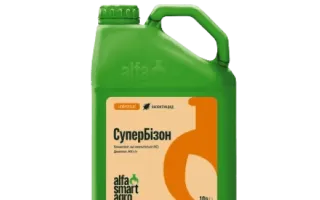
SuperBison
«Юнісіті Ентерпрайсіс Л.П.», Единбург, Великобританія
01.7K 17 offers
5.5 €за 1 л ≈ 281 ₴




See also
Often considered together with this variety


Recently viewed
Similar items in this catalog section


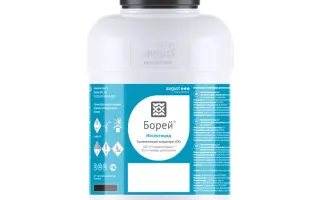
Borey
ЗАТ Фірма Август, Росія.,селище Вурнари,
From your browsing history
27.5K 9 offers
17.6 €за 1 л ≈ 899 ₴


Tabu
ZAT «August-Bel», Republic of Belarus
From your browsing history
45.8K 4 offers
9.8 €за 1 л ≈ 500 ₴


Comments · 0