
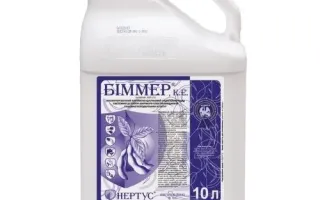


SKU #918
·
1 816 views
Fostran
Insecticides, Acaricides
Jiangsu Agricoem Laboratory Co., Ltd.User rating
0 votes0% positive reviews
No ratings yet — be the first.
Last Processing Date, Days
40
Maximum number of treatments
2
Method of Application
Spraying by vegetation
Form of the preparation
Emulsion concentrate
About product

A powerful systemic insecticide and acaricide for reliable pest control in field crops and orchards.
Last Processing Date, Days
40
Maximum number of treatments
2
Method of Application
Spraying by vegetation
Form of the preparation
Emulsion concentrate
Description
Systemic protection against a wide range of pests
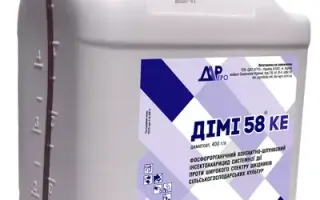
«Fostran», developed by the Chinese manufacturer «Jiangsu AgroChem Laboratory Co. Ltd.», is a robust insecticide and acaricide within the organophosphate group that has earned a solid reputation in field practice. Utilizing dimethoate as its active ingredient, the product provides powerful systemic action, allowing it to be rapidly absorbed by plants and translocated throughout their tissues. This makes it highly effective against both hidden pests and those feeding on crop sap.
Application and Efficacy
Supplied to the market by «Himagromarketing», this emulsifiable concentrate is a staple in intensive farming. It demonstrates high performance in controlling a wide variety of threats across different agricultural sectors:
- Cereals: cereal leaf beetle, bread beetle, grain beetle.
- Row and vegetable crops: beet flea beetle, meadow moth, pea beetle.
- Orchards and vineyards: carpenter moths and various mite species.
The product's versatility allows for safe use on winter wheat, winter barley, fodder beet, peas, apple trees, and grapevines. Its systemic action enables «Fostran» to curb pest development even in hard-to-reach areas of the plant.
Guidelines for Use
To achieve maximum protection, the regulation requires a maximum of two treatments per season, with intervals adjusted based on the phytosanitary situation. Application rates range from 0.5 to 2.0 L/ha, depending on the severity of the infestation and the specific crop type. It is essential to strictly adhere to the pre-harvest interval of 40 days, given the product's Hazard Class 2 rating. Spraying during the vegetative stage is the recommended and most effective application method.
Composition
Active ingredients
- Dimethoate инсектицид Фосфорорганические
Application
Used on crops
Against pests
Aphid
Beet flea beetle
Beet webworm
Carpenter moths
Cereal leaf beetle
Cereal leaf miner
Codling moth
Diamondback moth
European mole cricket
Frit flies and cereal flies
Grey sugar beet weevil
Ground beetle (Zabrus tenebrioides)
Leaf miner moth
Mites
Moths
Pea aphid
Pea moth
Pea weevil
Sunn pest
Thrips
Tortoise beetles
Tortricid moths
Wheat beetle
Specifications hover over for a hint about the specification
|
Last Processing Date, Days
Last Processing Date, Days
Number of days from processing to harvest cleanup |
40 |
|---|---|
|
Maximum number of treatments
Maximum number of treatments
Maximum recommended number of treatments per vegetation period. |
2 |
|
Method of Application
Method of Application
Seed treatment — treatment of seeds before sowing. Soil treatment — application of pesticides to soil, for example, in greenhouses. Seed treatment — a preparation used for pre-sowing treatment of seeds of various crops to protect seedlings from plant diseases and pests. In some c... |
|
| Form of the preparation | |
|
Drug Consumption
Drug Consumption
Mass of the preparation per unit of treated area. It is customary to express the dosage rate in kilograms per hectare. The dosage rate is most often given in terms of 100% active ingredient, although sometimes it is calculated based on the preparation in the form of application w... |
From 0.5 - 1.0 L/ha, From 1.0 - 2.0 L/ha |
| Danger Class | 2 |
|
Type of Action
Type of Action
Insecticides are divided into contact, systemic, stomach, and fumigants based on their mode of entry into the organism. Contact insecticides affect insects upon contact with any part of their body, penetrating into their organism through the integument. They are used against pest... |
|
| Catalog | Catalog → Insecticides, Acaricides |
| Manufacturer | Jiangsu Agricoem Laboratory Co., Ltd. |
| Applicant | Khimagromarketing LLC |
| Country | China |
Store offers · 10 from 7 stores
Prices are updated on loadLoading offers…
Aggregator catalog: prices are collected automatically from store websites, normalized by AI and converted at the current exchange rate. Before ordering, confirm the price and availability on the store's website. This block is not indexed by search engines — the data is loaded after the page opens.
Alternatives
Fodder beet · similar varieties



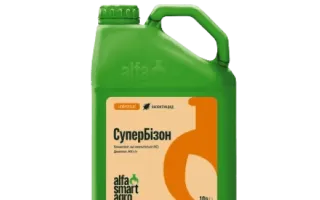
SuperBison
«Юнісіті Ентерпрайсіс Л.П.», Единбург, Великобританія
01.7K 17 offers
5.5 €за 1 л ≈ 281 ₴


See also
Often considered together with this variety


Recently viewed
Similar items in this catalog section


Borey
ЗАТ Фірма Август, Росія.,селище Вурнари,
From your browsing history
27.5K 9 offers
17.6 €за 1 л ≈ 899 ₴


Tabu
ZAT «August-Bel», Republic of Belarus
From your browsing history
45.8K 4 offers
9.8 €за 1 л ≈ 500 ₴


Comments · 0