

SKU #59449
·
29 views
KAMYSHANKA 3
Wheat
User rating
0 votes0% positive reviews
No ratings yet — be the first.
Type of Development
Winter wheat
Wheat Type
Soft wheat variety
Ostistost'
Ostistaya
Growing Season
240-250 days, 250-260 days, 260-270 days, 270-280 days, 280-290 days, 290-300 days
About product

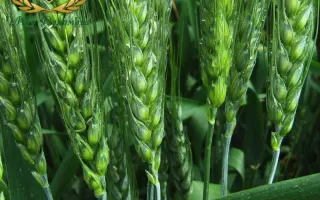
KAMYSHANKA 3 is a soft winter wheat (Triticum aestivum L.) variety of medium maturity, developed taking into account the agro-technical requirements and ecological features of the Lower Volga and Western Siberia regions. The plant is of medium height, ranging from 78 to 111 cm, with a semi-erect bush and a cylindrical spike of medium density and length. The spike is white in color, with short awn-…
Type of Development
Winter wheat
Wheat Type
Soft wheat variety
Ostistost'
Ostistaya
Growing Season
240-250 days, 250-260 days, 260-270 days, 270-280 days, 280-290 days, 290-300 days
Description
KAMYSHANKA 3 is a soft winter wheat (Triticum aestivum L.) variety of medium maturity, developed taking into account the agro-technical requirements and ecological features of the Lower Volga and Western Siberia regions. The plant is of medium height, ranging from 78 to 111 cm, with a semi-erect bush and a cylindrical spike of medium density and length. The spike is white in color, with short awn-like appendages and weak or absent pubescence on the terminal segment of the axis. The grain is colored, with a 1000-grain mass varying from 36 to 47 grams. The vegetative period ranges from 249 to 305 days, corresponding to a medium-maturity variety.
The KAMYSHANKA 3 variety is characterized by high winter hardiness, comparable to or slightly exceeding that of the Don 93 variety, as well as enhanced drought resistance, surpassing Don 93 and the previous version of Kamyshanka by 0.5-1.0 points. Regarding resistance to lodging, it is slightly inferior to the Don 93 variety but superior to the Kamyshanka variety. The waxy coating on the spike is absent or very weak, while on the sheath of the flag leaf and the upper internode, it is of medium intensity. The variety is susceptible to fusarium head blight and brown rust, however, in field conditions, septoria affects it very weakly, below the level of the Don 93 standard.
KAMYSHANKA 3 is recommended for cultivation in the Right-Bank zones of the Volgograd region on chernozem soils (ordinary and southern), light chestnut, and brown soils, as well as in the Left-Bank zone on chestnut and light chestnut soils. The average yield of the variety in the region is about 28.8 c/ha, while maximum indicators reach 60-61 c/ha. The grain of the variety is used for the production of flour and bread due to good baking qualities, although protein content is lower than that of the Don 93 variety.
The KAMYSHANKA 3 variety is characterized by high winter hardiness, comparable to or slightly exceeding that of the Don 93 variety, as well as enhanced drought resistance, surpassing Don 93 and the previous version of Kamyshanka by 0.5-1.0 points. Regarding resistance to lodging, it is slightly inferior to the Don 93 variety but superior to the Kamyshanka variety. The waxy coating on the spike is absent or very weak, while on the sheath of the flag leaf and the upper internode, it is of medium intensity. The variety is susceptible to fusarium head blight and brown rust, however, in field conditions, septoria affects it very weakly, below the level of the Don 93 standard.
KAMYSHANKA 3 is recommended for cultivation in the Right-Bank zones of the Volgograd region on chernozem soils (ordinary and southern), light chestnut, and brown soils, as well as in the Left-Bank zone on chestnut and light chestnut soils. The average yield of the variety in the region is about 28.8 c/ha, while maximum indicators reach 60-61 c/ha. The grain of the variety is used for the production of flour and bread due to good baking qualities, although protein content is lower than that of the Don 93 variety.
Crop & resistance
Disease resistance
Specifications hover over for a hint about the specification
| Type of Development | |
|---|---|
|
Wheat Type
Wheat Type
Biologically hard wheat differs from soft wheat in its greater demand for soil fertility and agronomic conditions (especially regarding field cleanliness from weeds), lower drought resistance and plasticity, relatively weaker root development, especially nodal roots, and lower ti... |
|
| Ostistost' | |
| Growing Season | 240-250 days, 250-260 days, 260-270 days, 270-280 days, 280-290 days, 290-300 days |
| Plant; height | 70-80 cm, 80-90 cm, 90-100 cm, 100-110 cm |
| Seed: mass 1.000 pcs seeds | 35-40 grams, 40-45 grams |
| Resistance to lodging | |
| Catalog | Catalog → Wheat |
| Originator | Фгбну Федеральный Научный Центр Агроэкологии, Комплексных Мелиораций И Защитного Лесоразведения Ран |
| Country | Russia |
Store offers
Prices are updated on loadLoading offers…
Aggregator catalog: prices are collected automatically from store websites, normalized by AI and converted at the current exchange rate. Before ordering, confirm the price and availability on the store's website. This block is not indexed by search engines — the data is loaded after the page opens.
See also
Often considered together with this variety



Recently viewed
Similar items in this catalog section


Comments · 0