
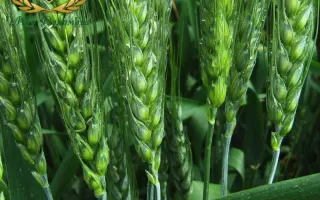

SKU #59740
·
31 views
UYAROCHKA
Wheat
User rating
0 votes0% positive reviews
No ratings yet — be the first.
Type of Development
Spring wheat
Wheat Type
Soft wheat variety
Growing Season
80-90 days
Seed: mass 1.000 pcs seeds
35-40 grams
About product

Uyarochka is a variety of soft spring wheat (Triticum aestivum L.) of the erythrospermum subspecies, characterized by an early ripening period with a growing season of 81-90 days. The plants are medium in height with a semi-upright bush and a dense pyramidal ear. The weight of 1000 grains is 33-37 grams. The variety is distinguished by its resistance to lodging and drought tolerance at the standar…
Type of Development
Spring wheat
Wheat Type
Soft wheat variety
Growing Season
80-90 days
Seed: mass 1.000 pcs seeds
35-40 grams
Description
Uyarochka is a variety of soft spring wheat (Triticum aestivum L.) of the erythrospermum subspecies, characterized by an early ripening period with a growing season of 81-90 days. The plants are medium in height with a semi-upright bush and a dense pyramidal ear. The weight of 1000 grains is 33-37 grams. The variety is distinguished by its resistance to lodging and drought tolerance at the standard level, as well as salinity resistance. In the conditions of Eastern Siberia, the average yield reaches 23.5-31.4 c/ha, which exceeds the indicators of standard varieties such as Novosibirsk 29, by 5.3 c/ha.
Uyarochka has good baking qualities corresponding to a good filler level. Diseases with brown rust affect the variety to a moderate degree, and smut — more strongly, however, resistance to brown rust is higher than the standard, while resistance to smut is at the standard level. These characteristics make the variety a reliable choice for cultivation in regions with different climatic conditions.
Research conducted under permafrost taiga pale soils of Yakutia and Eastern Siberia confirms the adaptability of the variety to soil and atmospheric drought, which contributes to accelerated grain ripening. Uyarochka demonstrates stable yield and resistance to adverse factors, making it promising for use in agricultural production in areas with variable climatic conditions.
Uyarochka has good baking qualities corresponding to a good filler level. Diseases with brown rust affect the variety to a moderate degree, and smut — more strongly, however, resistance to brown rust is higher than the standard, while resistance to smut is at the standard level. These characteristics make the variety a reliable choice for cultivation in regions with different climatic conditions.
Research conducted under permafrost taiga pale soils of Yakutia and Eastern Siberia confirms the adaptability of the variety to soil and atmospheric drought, which contributes to accelerated grain ripening. Uyarochka demonstrates stable yield and resistance to adverse factors, making it promising for use in agricultural production in areas with variable climatic conditions.
Specifications hover over for a hint about the specification
| Type of Development | |
|---|---|
|
Wheat Type
Wheat Type
Biologically hard wheat differs from soft wheat in its greater demand for soil fertility and agronomic conditions (especially regarding field cleanliness from weeds), lower drought resistance and plasticity, relatively weaker root development, especially nodal roots, and lower ti... |
|
| Growing Season | 80-90 days |
| Seed: mass 1.000 pcs seeds | 35-40 grams |
| Resistance to lodging | |
| Potential Yield | 8-9 tons |
| Catalog | Catalog → Wheat |
| Originator | Фгбну Федеральный Исследовательский Центр Красноярский Научный Центр Со Ран |
| Country | Russia |
Store offers
Prices are updated on loadLoading offers…
Aggregator catalog: prices are collected automatically from store websites, normalized by AI and converted at the current exchange rate. Before ordering, confirm the price and availability on the store's website. This block is not indexed by search engines — the data is loaded after the page opens.
See also
Often considered together with this variety



Recently viewed
Similar items in this catalog section


Comments · 0