Description
Thiabendazole is a systemic fungicide belonging to the benzimidazole chemical class. It is widely used in global agriculture for the management of various fungal diseases affecting field crops, fruits, and vegetables. Its primary function is to inhibit the growth and development of pathogenic fungi, making it an essential component of integrated pest management programs.
The mechanism of action of thiabendazole involves the inhibition of beta-tubulin synthesis, which effectively blocks the process of nuclear division (mitosis) in fungal cells. By preventing cell division, the compound halts the growth of mycelium and the production of spores. Its systemic nature allows it to be translocated within the plant tissues, providing prolonged protection against infections.
Thiabendazole is effectively applied to control a wide range of pathogens, including various smuts, fusarium root rots, and helminthosporium diseases. Beyond field applications, it plays a critical role in post-harvest treatment. It is commonly used to protect potatoes, citrus fruits, and other perishables from storage rots like Penicillium and Botrytis, significantly reducing post-harvest losses.
When applying thiabendazole, it is crucial to ensure thorough and uniform coverage of the target surface. For seed treatments, specialized equipment is used to achieve an even distribution of the active ingredient. In post-harvest scenarios, the application method—whether by dipping or spraying—must be carefully monitored to match the specific requirements of the produce and to optimize efficacy.
- Systemic mode of action for long-lasting protection.
- Highly effective against a broad range of fungal pathogens.
- Versatile use: from seed dressing to post-harvest storage.
- Excellent performance in suppressing storage rots.
Safety precautions must be strictly followed when handling thiabendazole. Personnel should utilize personal protective equipment (PPE), including respirators, gloves, and protective eyewear to minimize exposure. As a fungicide with moderate toxicity, users must avoid environmental contamination, particularly in aquatic systems, and adhere to defined pre-harvest intervals to ensure the safety of food products.
Контент-граф
Connections · Thiabendazole
Most often together:
Marketplace
Products · 63
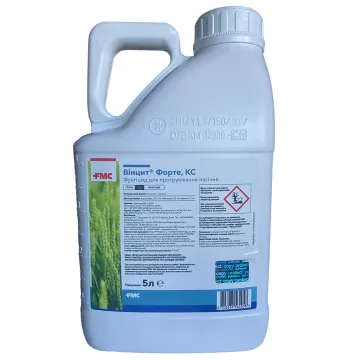


Vial Trust v.s.k.
ЗАТ Фірма Август, Росія.,селище Вурнари,
Fungicides
0
0
·
69
5 offers
6.3 €за 1 л
Купить

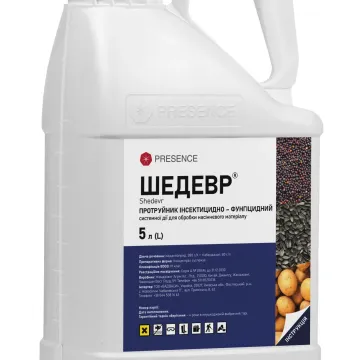

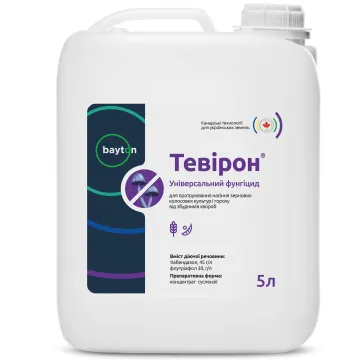


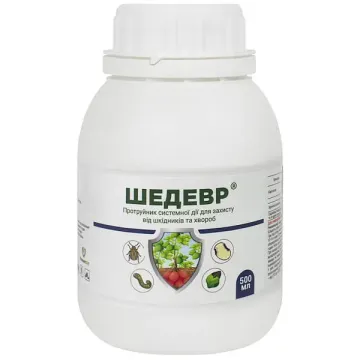
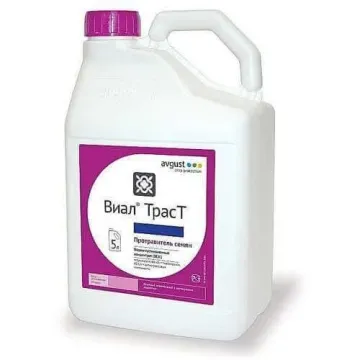
Shederv k.s.
Jiang'an Agrin Company Ltd.
Insecticides, Acaricides
0
0
·
42
7 offers
15.6 €за 1 л
Купить


Teviron
ТОВ «Фабрика агрохімікатів», Черкаси, Україна
Fungicides
0
0
·
41
1 offer
5.4 €за 1 л
Купить
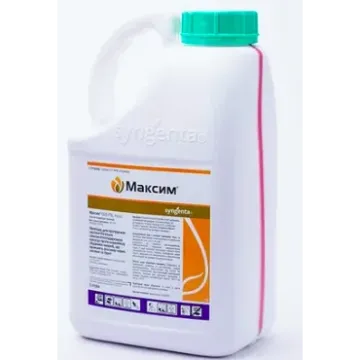


Shedevr c.s.
Jiang'an Agrin Company Ltd.
Insecticides, Acaricides
0
0
·
35
4 offers
38.8 €за 1 л
Купить

Shedevr k.s.
Jiang'an Agrin Company Ltd.
Insecticides, Acaricides
0
0
·
34
8 offers
15.6 €за 1 л
Купить

Cyclone k.s.
China National Chemical Construction Ningbo Import & Export Co.
Fungicides
0
0
·
33
2 offers
Купить


Cyclone k.s.
China National Chemical Construction Ningbo Import & Export Co.
Fungicides
0
0
·
31
1 offer
Купить

Tirana, CS
Hangzhou Ruijiang Chemical Co., Ltd.
Insecticides, Acaricides
0
0
·
31
5 offers
20.2 €за 1 л
Купить
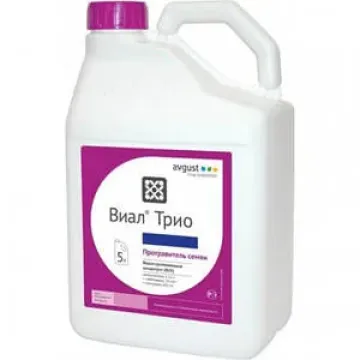


Passad 190 TN
Ф.Сімоніс Б.В. Барневелд, Нідерланди.
Fungicides
0
0
·
29
5 offers
13.9 €за 1 л
Купить


Vial TT w.s.c.
ЗАТ Фірма Август, Росія.,селище Вурнари,
Fungicides
0
0
·
28
1 offer
3.1 €за 1 л
Купить


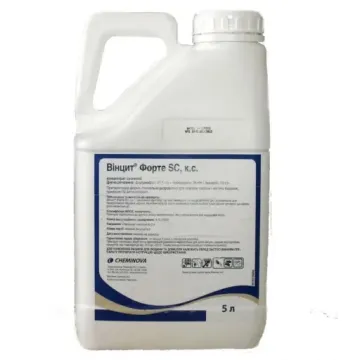


Spaider Ks
Фадер Альянс Лтд., Великобританія (Fader Alliance Ltd., England) на заводах Нідерландів, Польщі
Fungicides
0
0
·
25
1 offer
5 €за 1 л
Купить

Cyclone
China National Chemical Construction Ningbo Import & Export Co.
Fungicides
0
0
·
25
3 offers
14 €за 1 л
Купить


Fungikin k.s.
Sharda Worldwide Exports Pvt Ltd, Sharda World
Fungicides
0
0
·
24
18 offers
3.5 €за 1 л
Купить