

Disease · fungal · affects African violet, Almond, Barberton daisy
Especially harmful
Fusarium root rot
Fusarium oxysporum
Description
Fusarium root rot, caused by the soil-borne fungus Fusarium oxysporum, is a devastating disease affecting a vast array of botanical species. This pathogen invades the plant’s vascular system, causing systemic infection that disrupts water and nutrient uptake, eventually leading to plant wilting and death.
The fungus exhibits a remarkably broad host range, impacting various economically significant crops and ornamentals. Susceptible plants include chickpeas, soybeans, common beans, fodder beets, and cassava. Additionally, the pathogen frequently attacks ornamental species such as the Carpathian bellflower (Campanula carpatica), Jameson’s Gerbera, and various species within the Passiflora genus.
Initial symptoms are often subtle, starting with wilting during the hottest parts of the day and chlorosis of the lower leaves. As the disease progresses, the roots show signs of decay, discoloration (often turning brown or black), and a compromised root system. In advanced stages, the internal vascular tissue of the stem shows distinct browning when cross-sectioned.
Development is most favorable under conditions of high soil moisture and moderate to warm temperatures, typically between 22°C and 28°C. Stress factors such as poor soil drainage, nematode infestations, or mechanical damage to roots significantly increase the plant's susceptibility to successful colonization by Fusarium.
Effective management requires an integrated pest management (IPM) approach because the fungus survives for years in the soil.
- Use of certified, disease-free seed and resistant cultivars.
- Strict crop rotation schedules to break the pathogen's life cycle.
- Optimizing soil pH and fertility to create unfavorable conditions for the pathogen.
- Application of systemic fungicides as seed treatments.
- Maintaining field hygiene to prevent the spread of contaminated soil.
Biology
Pathogens and affected parts
Pathogens
Fusarium oxysporum· fungus
Fusarium solani· fungus
Fusarium· fungus
Nectria haematococca· fungus
Fusarium acuminatum· fungus
Fusarium arthrosporioides· fungus
Fusarium avenaceum· fungus
Fusarium equiseti· fungus
Fusarium graminearum· fungus
Gibberella zeae· fungus
Fusarium proliferatum· fungus
Fusarium proliferatum· fungus
Affected plant parts
root
Content graph
Affects crops · 17
Контент-граф
Connections · Fusarium root rot
Most often together:
Marketplace
Products · 358
All 358
Fungicides 279
Tomato 21
Insecticides, Acaricides 13
Sugar Beet 9
Tulips 7
Pea 6
Vegetable Pea 3
Plant Growth Regulator 3
Biological Products 3
Sunflower 2
Wheat 2
Sorghum 2


Vitavax 200 FF
Crompton (Uniroyal Chemical) Registration Limited
Fungicides
1
0
·
4.1K
7 offers
6.3 €за 1 л
Купить







Fundazim
ТОВ «Фабрика агрохімікатів», Черкаси, Україна
Fungicides
0
0
·
1.8K
9 offers
14.6 €за 1 л
Купить



Lametil WP
Nanjing No.1 Pesticide Factory of Red Sun Group Co., Ltd.
Fungicides
0
0
·
1.4K
2 offers
1.8 €за 1 л
Купить

Arbalet
Хімічні заводи «Органіка-Сажина»С.А., Нова Сажина, Польща
Fungicides
0
0
·
1.4K
4 offers
16 €за 1 л
Купить


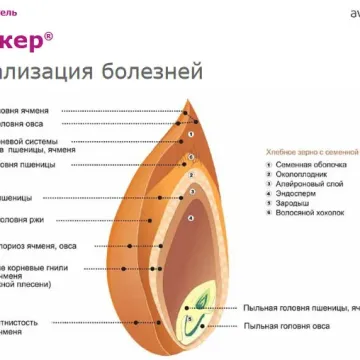
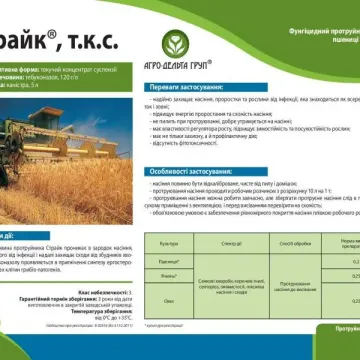
Strike
Три Дельта Компані Інтернешнл, Гонконг, Китай.
Fungicides
0
0
·
1.3K
2 offers
1.4 €за 1 л
Купить

Orus Universal Es
F. Macteshim Chemical Works, LLC
Fungicides
0
0
·
1.3K
6 offers
11.5 €за 1 л
Купить


Sarfun 500 SC
Хімічні заводи «Органіка-Сажина»С.А., Нова Сажина, Польща
Fungicides
0
0
·
1.2K
1 offer
26.7 €за 1 л
Купить

Tomagavk
China Chemical Industrial & Rice Co. Ltd
Fungicides
1
0
·
1.2K
9 offers
11.7 €за 1 л
Купить


Vispar
Ф.Суперус Ко ., Лтд., Гонг-Конг, Шанхай, Китай.
Fungicides
0
0
·
878
6 offers
1.6 €за 1 л
Купить

Tebun-Ultra
Ф.Жіангсу Чангквінг Агрокемікал.Ко., Лтд., Китай
Fungicides
0
0
·
877
18 offers
3.6 €за 1 л
Купить

Tebuzan Ultra
Jiangsu Agricoem Laboratory Co., Ltd.
Fungicides
0
0
·
821
14 offers
9.1 €за 1 л
Купить


Community
Discussion
No discussions yet — be the first.